


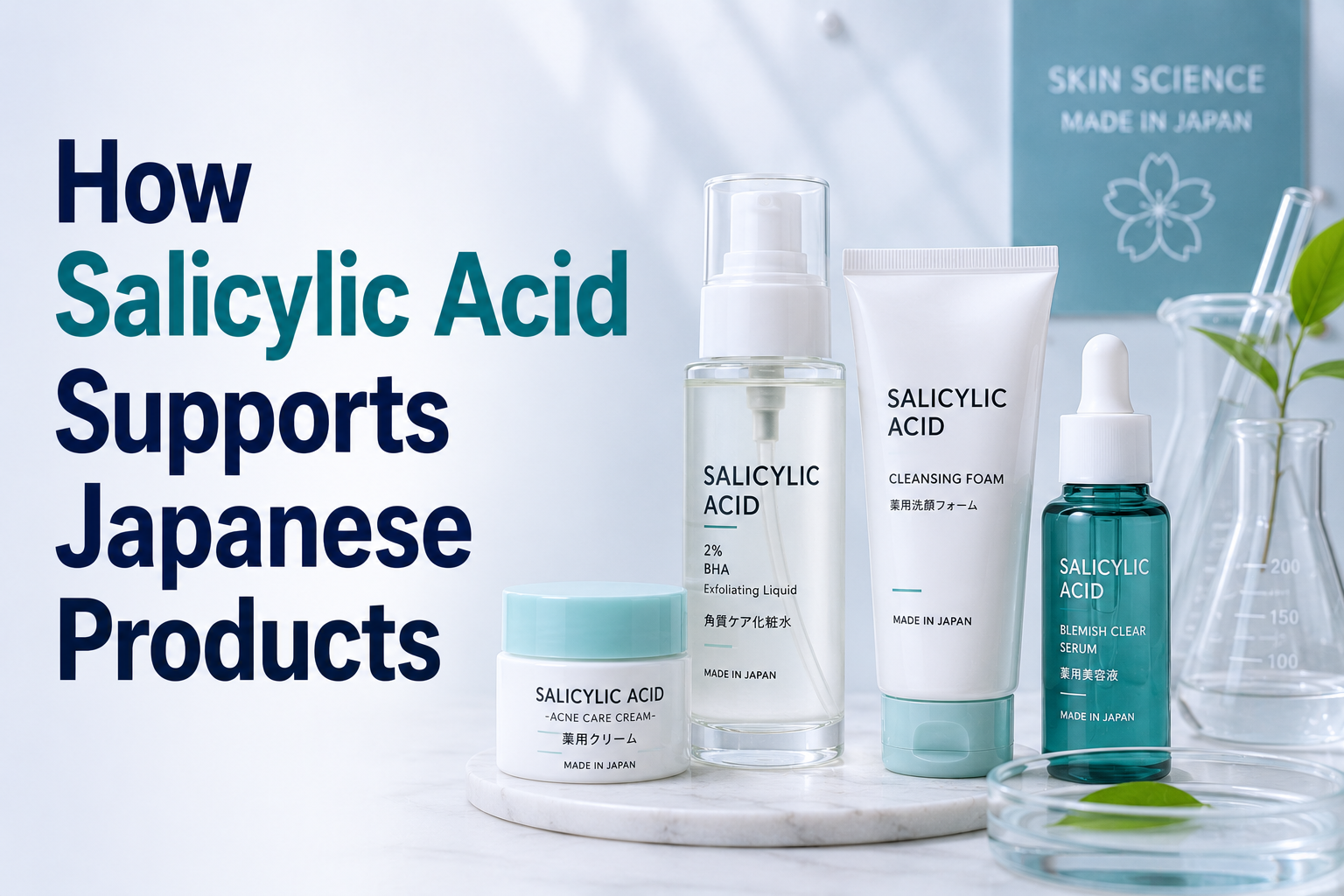
Salicylic acid is used across Japan’s pharmaceutical, personal-care, cosmetic, and chemical industries. Its properties make it suitable for topical skincare products, medicated formulations, exfoliating treatments, preservatives, and the production of salicylate-based compounds. Growing attention to skin health, product quality, ingredient performance, and specialized formulations is supporting its use across consumer and industrial applications.
A recent study by MarkNtel Advisors highlights that the Japan salicylic acid industry was valued at USD 41.83 million in 2025. It is projected to grow from USD 45.01 million in 2026 to USD 69.85 million by 2032, registering a CAGR of 7.6% during the forecast period. This growth reflects skincare demand, pharmaceutical manufacturing, personal-care innovation, and wider use of specialty chemical ingredients.
Skincare Products Support Ingredient Use
Salicylic acid is commonly included in cleansers, lotions, gels, creams, shampoos, and targeted skincare treatments. As a beta-hydroxy acid, it is used in formulations designed to remove accumulated surface cells and support clearer-looking skin. This makes it relevant to products developed for oily skin, clogged pores, uneven texture, and blemish-prone conditions.
The National Library of Medicine’s PubChem database identifies salicylic acid as a crystalline compound available in topical forms such as ointments, creams, gels, liquids, and patches. Its adaptability across different delivery formats allows manufacturers to develop products for specific application areas and consumer preferences.
Dermatological Applications Expand Demand
Topical salicylic acid is also associated with the treatment of several skin conditions. Different concentrations and dosage forms may be used for acne, scaling, thickened skin, corns, calluses, dandruff, and warts. These uses support demand from pharmaceutical manufacturers, dermatology-focused brands, and medicated personal-care product developers.
The MedlinePlus guidance on topical salicylic acid explains that the ingredient is used to help clear and prevent acne-related blemishes and treat conditions involving scaling or excess skin-cell growth. Product selection, concentration, and application instructions remain important because formulations intended for one condition may not be appropriate for another.
Cosmetic Innovation Shapes Formulations
Japanese consumers place strong emphasis on product texture, quality, convenience, and carefully designed skincare routines. Manufacturers therefore assess how salicylic acid interacts with moisturizers, surfactants, stabilizers, fragrances, and other active ingredients. Formulation teams must balance performance with skin compatibility and the intended frequency of use.
Product innovation may involve gentle cleansers, leave-on treatments, scalp-care formulations, and combination products designed for specific skin concerns. Manufacturers must also consider ingredient stability, packaging compatibility, storage conditions, and how effectively the active ingredient remains distributed throughout the product during its shelf life.
Safety Assessment Guides Product Development
Salicylic acid concentration and intended use influence the safety assessment of cosmetic formulations. Manufacturers need to evaluate exposure level, application area, user age, rinse-off or leave-on format, and possible interaction with other salicylate-containing products. Clear directions and suitable warnings help consumers use products as intended.
The European Commission’s scientific opinion on salicylic acid in cosmetics evaluates its use as a preservative and discusses concentration limits and eye-irritation concerns. Although Japanese products must follow applicable domestic requirements, international safety assessments remain useful references for formulation reviews and ingredient-risk evaluation.
Pharmaceutical Manufacturing Supports Consumption
Salicylic acid also serves as an intermediate in pharmaceutical and specialty chemical production. Manufacturers use controlled chemical processes to develop salicylate derivatives and other compounds used in medical and industrial applications. These operations require consistent purity, traceability, controlled storage, and reliable raw-material specifications.
Pharmaceutical-grade materials must meet stricter quality requirements than general industrial grades. Suppliers and manufacturers therefore monitor impurity profiles, batch consistency, documentation, and handling practices. Quality-control laboratories may evaluate chemical identity, concentration, moisture, and other characteristics before the material enters production.
Quality and Regulation Shape Future Growth
The development of salicylic acid applications in Japan will remain connected with skincare innovation, dermatological demand, pharmaceutical manufacturing, and specialty chemical production. Producers must balance functional performance with safety, regulatory compliance, and changing consumer expectations.
Manufacturers that maintain ingredient purity, controlled formulation processes, suitable concentration levels, and clear product instructions will be better positioned to serve evolving requirements. As personal-care and healthcare products become more specialized, salicylic acid will continue to support formulations designed for targeted performance and consistent product quality.

 English
 French
 Spanish
 Portuguese
 Deutsch
 Turkish
 Dutch
Dutch
 Italiano
 Russian
 Romaian
 Portuguese (Brazil)
 Greek
Greek