


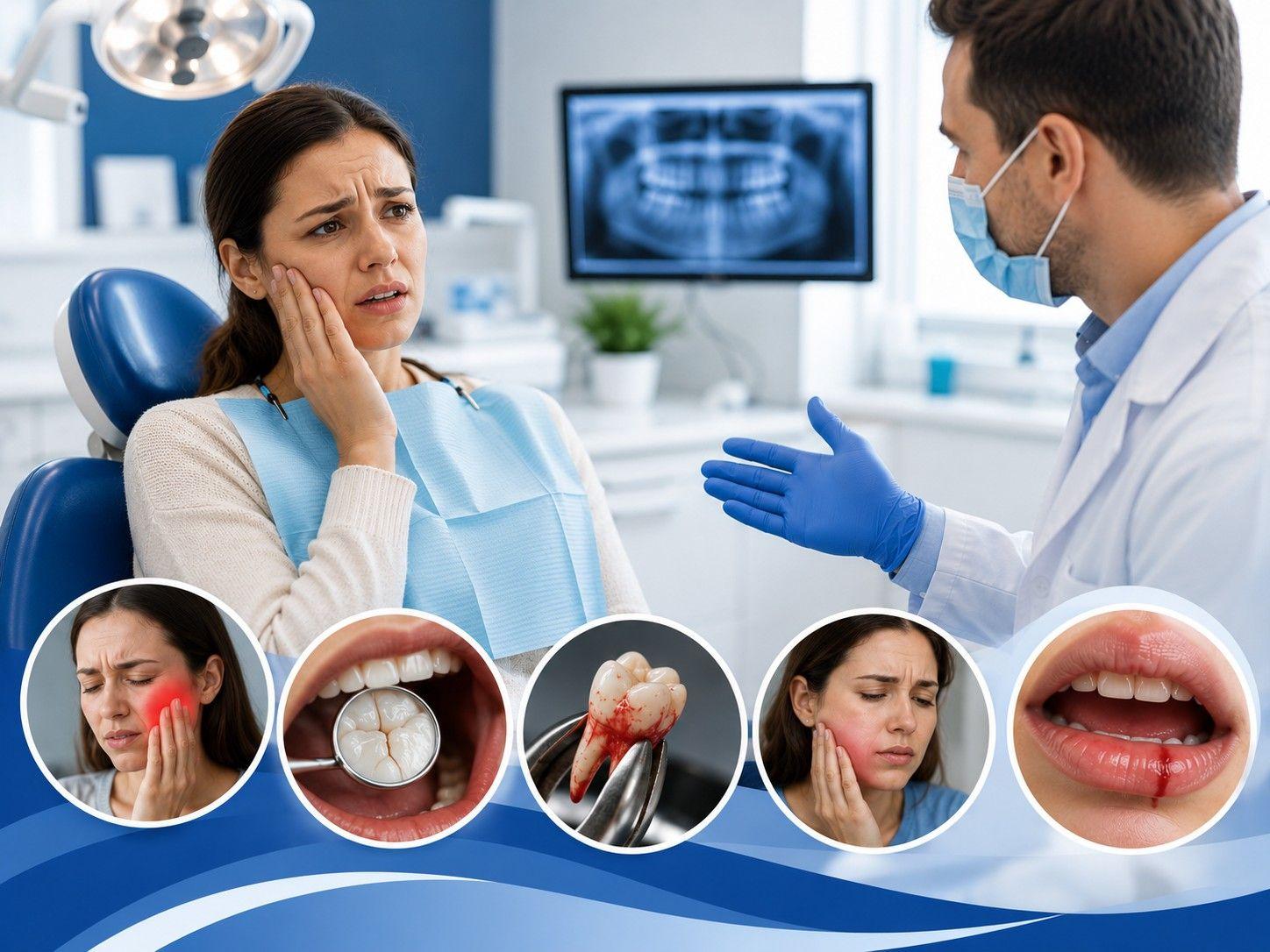
It's 9pm on a Sunday. Your back molar has been aching since lunch, and now the pain is radiating into your jaw. Do you drive to Campbelltown Hospital? Wait until Monday? Or is this the kind of thing that needs someone to look at it tonight?
Most people get this decision wrong in one direction or the other. Some sit through three days of pain that could have been resolved in twenty minutes. Others turn up at an emergency department for something a dental practice would have handled far better, and far cheaper.
Here's how to tell the difference.
The Genuine Emergencies
These need attention the same day, ideally within hours.
A knocked-out adult tooth. This is the one where the clock matters most. A permanent tooth that has been completely displaced from its socket has a realistic chance of being replanted successfully, but that window closes fast. Handle the tooth by the crown, not the root. If it's dirty, rinse it in milk or saline, never scrub it. Then either slot it back into the socket and bite gently on a clean cloth, or store it in milk and get to a practice quickly. Water is a poor storage medium because it damages the cells on the root surface.
Facial swelling. Swelling in the cheek, under the jaw, or around the eye that's associated with a tooth is not something to sleep on. It suggests infection spreading beyond the tooth into surrounding tissue. If the swelling is affecting your ability to swallow, open your mouth, or breathe comfortably, that's an ambulance call, not an appointment.
Uncontrolled bleeding after an extraction. Some oozing for several hours after a tooth comes out is normal. Steady bleeding that soaks through gauze after applying firm pressure for twenty minutes is not.
Trauma to the face and mouth. Sporting injuries are common across the Macarthur region, and a hit to the mouth can fracture teeth below the gumline where you can't see the damage. If a tooth has been pushed out of position or feels loose after impact, it needs assessing quickly.
The Urgent-But-Not-Tonight Category
These need attention within a day or two, but you're not doing damage by waiting until morning.
A cracked or chipped tooth without significant pain sits here. So does a lost filling or crown, provided the exposed tooth isn't sharply sensitive. A dull, manageable ache that responds to over-the-counter pain relief usually falls into this group too, though persistent throbbing that wakes you at night is edging towards the urgent column.
Sensitivity to hot and cold that lingers for more than thirty seconds after the stimulus is removed is worth flagging. That lingering quality often indicates the nerve is inflamed rather than simply irritated, and inflamed nerves tend to progress rather than settle on their own.
What Emergency Departments Can and Can't Do
This is where a lot of Campbelltown residents lose time. Hospital emergency departments in New South Wales are not generally staffed with dental practitioners. What they can do is manage severe infection with antibiotics, provide pain relief, and handle facial trauma involving fractures or significant soft tissue damage.
What they usually cannot do is treat the tooth itself. You'll likely be given antibiotics and told to book in somewhere. That's a useful holding measure when infection is spreading, but it doesn't address the cause. The abscess will return once the antibiotics finish unless the underlying tooth is treated.
The practical rule: if the problem is the tooth, you need dental treatment. If the problem has moved beyond the tooth into your airway, your ability to swallow, or involves a suspected jaw fracture, go to the hospital.
Managing Pain While You Wait
Ibuprofen tends to be more effective for dental pain than paracetamol alone, because most dental pain is inflammatory in nature. Taking both together, staggered, is often more effective than either at full dose, though anyone with stomach issues, kidney problems, or on blood thinners should check with a pharmacist first.
A cold compress on the outside of the cheek helps with swelling. Heat does not, and can actually encourage an infection to spread.
Avoid the old trick of holding aspirin against the gum. It causes a chemical burn to the soft tissue and does nothing for the tooth underneath.
Why Waiting Usually Costs More
The most common thing seen in urgent appointments is a problem that was manageable six weeks earlier. A small area of decay that could have been filled becomes a root canal. A root canal that was avoided becomes an extraction. An extraction becomes an implant or a bridge.
Cost is a genuine barrier for a lot of families, and that's understandable. But the arithmetic rarely works in favour of waiting. Most private health funds cover a portion of an emergency examination, and payment plan options generally exist for treatment that follows.
If Something Feels Wrong
Ring somewhere first, even outside hours. Most practices have arrangements for genuine emergencies and can advise over the phone whether you need to be seen immediately or whether it's safe to wait until morning.
Describe the symptoms accurately. Swelling, fever, difficulty swallowing, and how long the pain has lasted all change the urgency. Whoever answers can triage properly if you give them the detail.
Across Bradbury, Airds, Ruse, Ambarvale and the wider Macarthur area, the team at Bradbury Dental Surgery keeps time set aside each day for urgent cases. If you're unsure whether what you're experiencing qualifies, it's worth a phone call. Nobody has ever been told off for asking.

 English
 Arabic
 French
 Spanish
 Portuguese
 Deutsch
 Turkish
 Dutch
Dutch
 Italiano
 Russian
 Portuguese (Brazil)
 Greek
Greek