


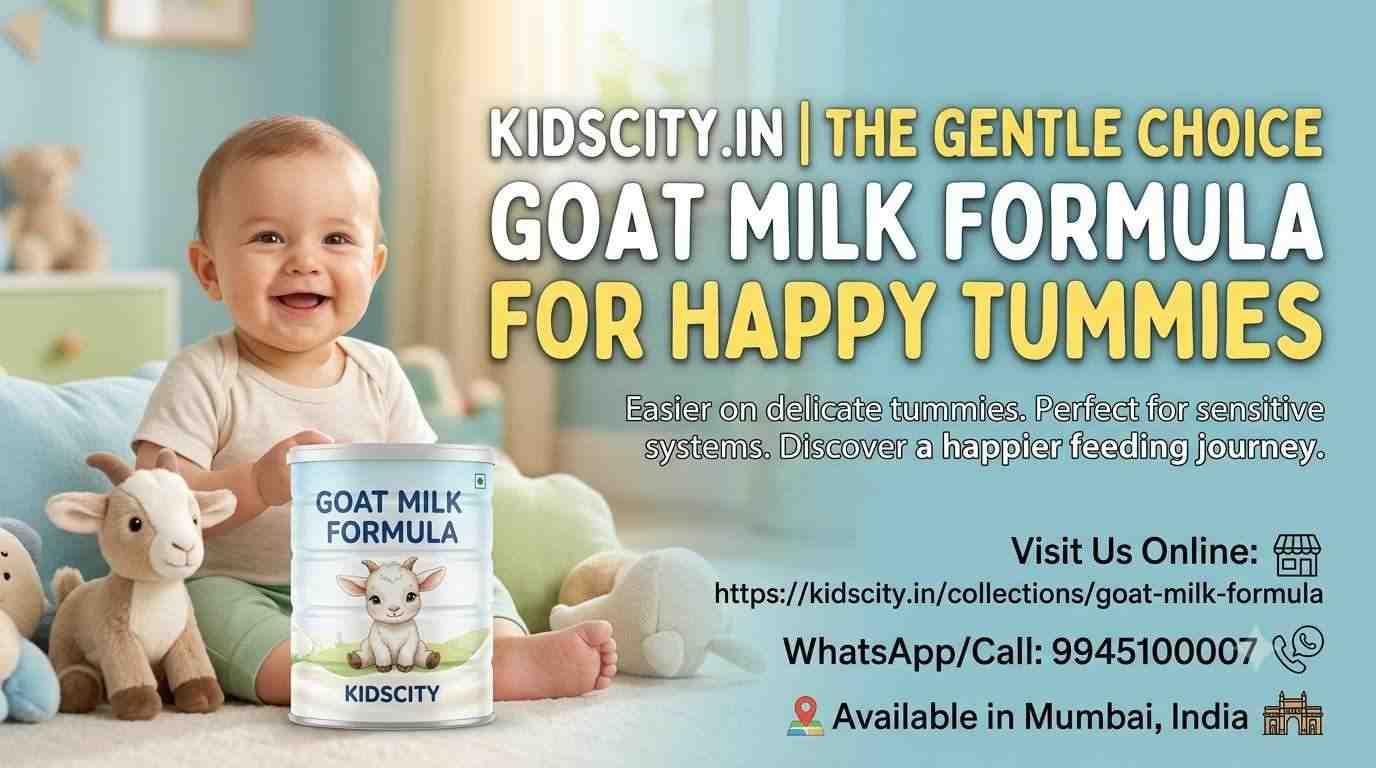
Selecting the proper nutrition for an infant can be quite daunting for new parents. Whenever your child develops problems such as minor indigestion issues, frequent vomiting or spitting up, and painful gas, it becomes natural for you to seek out some safe option other than the conventional milk formulas. Goat milk formulas have gained popularity as the best possible choice.
Is this formula suitable for your baby? Let's understand more about its clinical basis and unique digestive advantages along with recommendations from pediatricians.
Why is This Alternative Dairy Gaining Popularity Globally?
The nutritional market for baby food was largely under the monopoly of cow's milk for many years. But now, owing to the recent research conducted in clinical studies and changing preferences of parents, other sources of milk have come into the limelight. Not only is it a temporary fad but also a nutrient complete product that perfectly meets the physiological demands of the growing baby.
+---------------------------+-------------------------------+
| Nutrient Content | Importance in Child Development|
+---------------------------+-------------------------------+
| A2 Casein | Digestion |
| Short-Chain Fatty Acids | Energy |
| HMO Prebiotics | Gut Microbiome |
| Iron & Folate | Blood Health |
+---------------------------+-------------------------------+
The A2 Protein Advantage
It is mainly because of the difference in the molecular structure of these two dairy products. The normal cow's milk has the presence of A1 beta-casein protein molecules. There could be some instances where the A1 beta-casein proteins might slowly get digested in the baby’s stomach and release some peptides which cause irritation.
Goat’s milk, on the other hand, has mainly A2 beta-casein protein molecules. It makes the digestion of these proteins very easy as compared to cow’s milk and also resembles the proteins present in human milk.
Curd Formation in the Stomach
When standard infant nutrition hits a baby's stomach acid, it undergoes a process called curd formation. Cow's milk forms a relatively firm, dense curd that takes a longer time to pass through the digestive tract.
On the other hand, the caprine alternative forms a much softer, looser, and more porous curd.
-
Easier digestion
-
Less gas
-
Fewer spit-ups
The Nutritional Breakdown: What is Inside the Can?
They require the absolute assurance that their babies get all the nutrients they need for brain, bone, and immune growth. Modern-day commercial formulas have been well-formulated to comply with the world’s infant nutrition criteria and are thus equally nutritional to traditional milk formulas.
Short- and Medium Chain Fatty Acids (SCFAs and MCFAs)
This particular milk has an abundance of SCFAs and MCFAs. These specific fats are absorbed much more quickly by the body than the long-chain fatty acids which usually occur in cow’s milk. Therefore, this provides your baby with a source of easy-to-access energy without putting too much strain on his/her metabolism.
Micronutrients and Bioavailability
Although unprocessed animal milk may lack adequate amounts of micronutrients such as iron and folic acid in an infant’s diet, commercially formulated goat milk has undergone modification and balancing to provide the exact amount of required daily values.
Additionally, the bioavailability of these naturally occurring minerals, such as calcium, phosphorous, and magnesium, is very high, meaning that the baby’s body will absorb and make use of them in building healthy bones.
Feeding the Gut Flora
The baby’s immune system is based in the baby’s gut. In the baby formula, there are naturally occurring prebiotics called oligosaccharides. These have a structure that is like HMOs. They provide food for the gut bacteria.
Is This Formula Hypoallergenic?
This is one of the most common questions pediatricians hear from anxious parents. It is vital to distinguish between a true medical allergy and a general digestive sensitivity before switching your baby's food.
Critical Health Warning: If a pediatric gastroenterologist diagnoses your baby with a confirmed Cow's Milk Protein Allergy (CMPA), alternative mammalian milk products are generally not a safe substitute.
Cross-Reactivity Risks
Caprine milk protein, although structurally different from cow’s milk, is sufficiently similar for a hypersensitive immune system to react to both types. For those babies that suffer from a proven CMPA, there is always the absolutely medical solution in the form of extensively hydrolyzed or amino acid-formulas.
Taking Care of Your Baby’s Delicate Gut
If you know for certain that your child doesn’t suffer from any medical allergy, but only from functional problems such as diarrhea, colic, or bloating, then changing the source of dairy will help immensely. It gives your baby’s gut a break from all the work of digestion each day.
Key Benefits of Making the Switch
If you are considering switching your infant to a premium caprine alternative, you can look forward to several distinct advantages that support daily wellness for both baby and parent.
-
Better sleep: Comfort in the gut directly leads to longer, more peaceful sleep cycles for your baby.
-
Regular stools: The unique fat and protein composition helps prevent infant constipation.
-
Immune support: Naturally occurring oligosaccharides act as prebiotics to feed healthy gut bacteria.
How to Choose the Best Brand for Your Baby
The premium baby food market offers several excellent international and domestic brands. When reading ingredient labels on the back of the can, look for products that prioritize clean sourcing and minimal additives.
Look for Whole Milk Bases
Many premium brands use whole milk as their primary ingredient rather than skimmed variations. Whole milk retains its natural fats, drastically reducing the need for heavily processed vegetable oil blends to hit caloric requirements.
Avoid Excess Sugars
High-quality infant options rely entirely on lactose—the natural sugar found in milk—as their primary carbohydrate source. Avoid brands that list corn syrup solids, glucose syrup, maltodextrin, or sucrose high on the ingredient deck.
Safe Preparation Checklist
Proper hygiene prevents harmful bacterial growth and ensures your baby gets the exact caloric concentration they need for healthy weight gain.
-
Sterilize equipment: Before mixing, wash your hands thoroughly and sanitize all bottles, nipples, and rings in boiling water or a steam sterilizer.
-
Boil water: Check the temperature. Boil fresh water and let it cool to roughly 70°C (158°F) to ensure it kills any potential microbes without damaging milk nutrients.
-
Measure precisely: Follow instructions carefully. Pour the exact amount of water into the bottle first, then add the level scoops of powder. Do not over-pack the scoop.
-
Mix and cool: Ready to serve. Cap the bottle and shake vigorously until the powder dissolves completely. Cool the bottle under running tap water until it reaches body temperature before feeding.
The Environmental Impact of Caprine Farming
Beyond the immediate health benefits for your infant, choosing this style of farming can also be a more sustainable choice for the planet.
Goats require significantly less water, land, and feed than dairy cows to produce an equivalent amount of milk. They are highly efficient foragers and thrive in diverse climates. Furthermore, they produce far less methane gas per animal. This environmental efficiency makes the production of goat milk formula a lighter burden on agricultural ecosystems worldwide.
Frequently Asked Questions
Can I give my newborn raw milk?
No. Raw milk from any animal lacks the required nutrient ratios for human infants and poses severe bacterial risks. Only use commercially regulated, fortified infant options.
Does it taste different to a baby?
It has a mild, creamy, and slightly sweet taste. Most babies transition to it seamlessly without rejecting the bottle.
Is it suitable for lactose intolerance?
This milk contains slightly less lactose than cow's milk, but it is not lactose-free. It is not suitable for infants diagnosed with medical lactose intolerance or galactosemia.
Selecting the best nutrition for your baby is a deeply personal decision. It offers a clinically backed, gentle option that respects your baby's delicate digestive system while delivering comprehensive nutritional support.

 English
 French
 Spanish
 Portuguese
 Deutsch
 Turkish
 Dutch
Dutch
 Italiano
 Russian
 Romaian
 Portuguese (Brazil)
 Greek
Greek