



The ochsner clamp is a versatile, toothed surgical instrument used primarily to grasp and hold tissue or blood vessels during procedures. Known for its interlocking teeth and secure grip, it remains a staple in operating rooms worldwide—and Azeemed Instruments is proud to offer precision-crafted versions built to meet the highest professional standards.
Few surgical instruments have earned their place in the operating room quite like the ochsner clamp. Surgeons trust it. Scrub technicians reach for it instinctively. And for good reason—this deceptively simple tool plays a critical role in procedures that demand precision, control, and reliability. At Azeemed Instruments, the goal has always been clear: provide surgical professionals with tools that perform when it matters most.
Whether you're a seasoned surgeon or a medical student learning the fundamentals of instrumentation, understanding the design, function, and application of this clamp is essential. This post covers everything you need to know—from its defining features to how it compares to similar tools, and why instrument quality can make a real difference in surgical outcomes.
What Is the Ochsner Clamp and Why Is It Used?
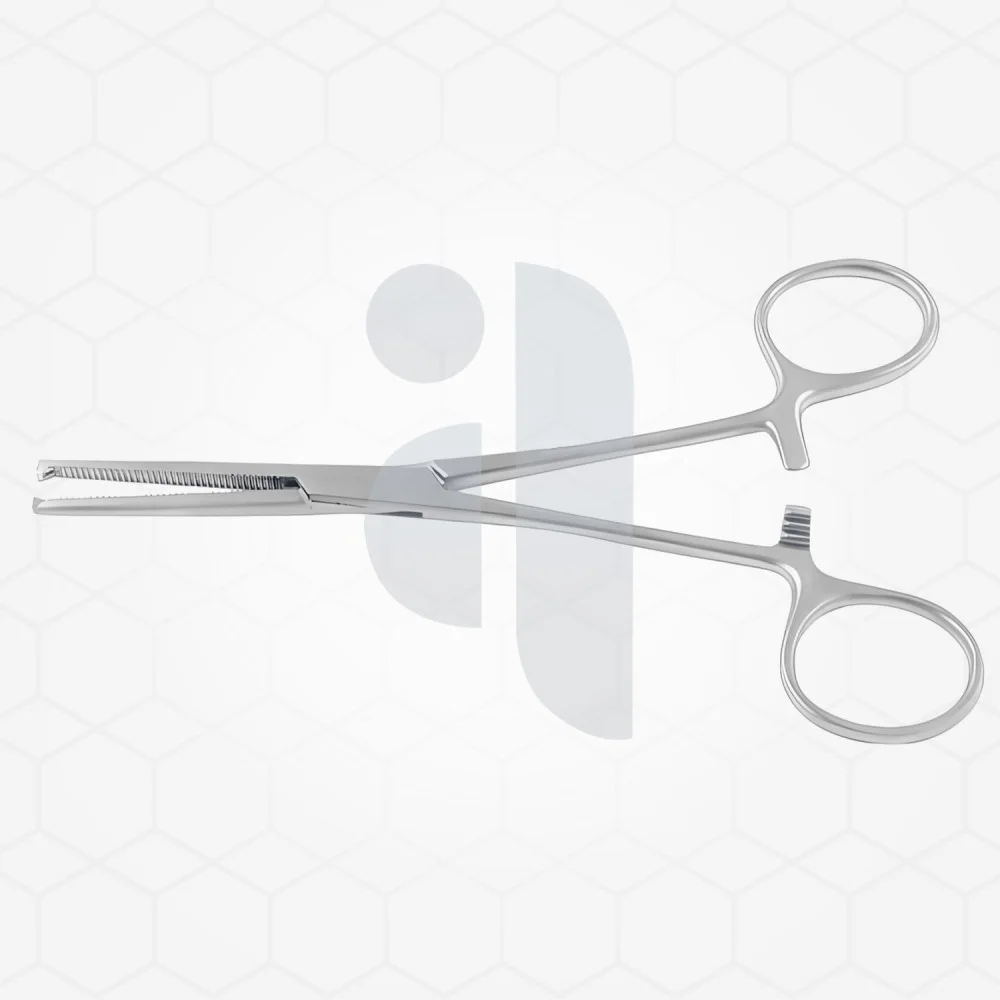
The ochsner clamp—sometimes called the Kocher clamp—is a straight or curved hemostatic forceps featuring a distinctive set of transverse serrations along the jaw, combined with one or more interlocking teeth at the tip. These teeth are what set it apart from smoother hemostatic clamps. They create a firm, non-slip grip on tissue, making the instrument especially useful when secure grasping is more important than tissue preservation.
In the operating room, surgeons use this clamp to control bleeding by clamping blood vessels before ligation, to hold tough or fibrous tissue in place, and to manipulate structures during dissection. Its ratcheted handle locks the jaws at a consistent tension, freeing the surgeon's hands for other tasks without losing control of the tissue.
The arterial clamp, by contrast, is specifically designed to occlude blood flow within an artery without causing damage to the vessel wall. Unlike the ochsner clamp's toothed grip, most arterial clamps feature atraumatic, finely serrated jaws that compress the artery gently but effectively. Surgeons working in vascular procedures will often use both instruments at different stages—the arterial clamp to manage blood flow, and the ochsner clamp to handle the surrounding fibrous tissue or fascia where a more aggressive grip is appropriate.
How the Ochsner Clamp Differs From Other Hemostatic Forceps
Not all clamps are created equal, and knowing which instrument to reach for is a mark of surgical expertise. The hemostatic forceps family is broad, and the ochsner clamp occupies a specific niche within it.
Standard Kelly or Crile forceps feature fully serrated jaws without teeth. They're designed to be gentler on tissue—ideal for clamping softer structures or vessels where minimal trauma is a priority. The ochsner clamp, with its terminal teeth, delivers a stronger hold. This makes it better suited for tougher anatomical structures like fascia, fibrous bands, or thick soft tissue where a smoother clamp might slip.
Mosquito forceps, on the other hand, are much smaller and intended for fine, delicate work—typically in superficial or pediatric procedures. The ochsner clamp is a full-sized instrument built for deeper, more demanding surgical environments.
Understanding these distinctions helps surgical teams stock and organize their instrument trays more effectively, reducing procedure time and the risk of instrument-related complications.
What Materials and Craftsmanship Define a High-Quality Ochsner Clamp?
The performance of any surgical clamp comes down to two things: material and manufacturing precision. Azeemed Instruments is dedicated to providing high-quality surgical tools that meet the needs of professionals, and that commitment starts at the material level.
Premium ochsner clamps are crafted from medical-grade stainless steel—specifically grades like 410 or 420 stainless, which offer a balance of hardness, corrosion resistance, and edge retention. Proper hardness is critical: jaws that are too soft will deform under repeated clamping pressure, while overly brittle steel risks micro-fractures over time.
Beyond material, the precision of the jaw alignment matters enormously. Misaligned jaws can result in uneven clamping pressure, which reduces grip reliability and may cause unintended tissue trauma. Quality instruments feature jaws that meet symmetrically along their entire length, with teeth that interlock cleanly without gaps or misalignment.
The ratchet mechanism—those interlocking notches on the handle—should engage with a smooth, audible click and hold under load without slipping. In a busy operating room, a ratchet that slips mid-procedure is more than inconvenient; it can be genuinely dangerous.
Finally, surface finish matters for sterility. Instruments with rough or pitted surfaces are harder to clean and may harbor bacteria even after sterilization. A fine, matte or satin finish reduces surface irregularities and supports thorough decontamination through autoclaving.
How Azeemed Instruments Supports Surgical Professionals
Azeemed Instruments has built its reputation on one simple principle: surgical professionals deserve tools they can depend on without question. Every ochsner clamp in the Azeemed catalog goes through rigorous quality checks covering jaw alignment, ratchet function, surface finish, and material integrity before it ever reaches a surgical tray.
The brand's catalog extends well beyond a single instrument. From needle holders to retractors, tissue forceps to scissors, Azeemed Instruments designs its full range with the same attention to detail and commitment to durability. For hospital procurement teams, this consistency means fewer supplier relationships to manage and greater confidence in cross-instrument compatibility.
For individual surgeons or clinics sourcing instruments independently, Azeemed Instruments offers clear product specifications, responsive support, and instruments built to withstand the rigors of repeated use and sterilization cycles. It's the kind of reliability that makes a real difference when the pressure is on.
Proper Care and Maintenance of Your Ochsner Clamp
Even the best surgical instruments need proper care to deliver a long service life. An ochsner clamp that's well-maintained will retain its jaw alignment and ratchet function far longer than one that's cleaned carelessly or stored improperly.
After each procedure, instruments should be rinsed in clean water as soon as possible to prevent blood and tissue debris from drying in the joints and serrations. Enzymatic cleaners are highly effective at breaking down organic material before the ultrasonic cleaning or manual scrubbing stage. Pay particular attention to the ratchet teeth and jaw serrations—these areas trap debris and are often missed during rushed cleaning.
Lubrication with a water-soluble instrument lubricant—commonly called "instrument milk"—keeps the box-lock joint and ratchet mechanism moving smoothly and helps prevent corrosion. Apply lubricant after cleaning and before autoclaving for best results.
Inspect instruments regularly for signs of wear, corrosion, pitting, or jaw misalignment. A damaged ochsner clamp should be removed from service immediately. The cost of replacing a worn instrument is always lower than the cost of a procedure complication.
The Ochsner Clamp in Modern Surgical Practice
Surgical technology evolves rapidly, but certain instruments prove timeless. The ochsner clamp has remained a fixture in operating rooms for over a century—and the reason is simple. Its function is irreplaceable. No laparoscopic grasper or electrosurgical tool fully substitutes for its direct, mechanical grip in open surgical procedures.
Modern manufacturing has improved consistency and precision, but the fundamental design that made this clamp effective remains largely unchanged. That's a testament to how well-conceived the original instrument was—and why leading manufacturers like Azeemed Instruments continue to refine rather than reinvent it.
Choosing the Right Supplier for Your Surgical Instruments
Selecting an instrument supplier is a decision with long-term consequences. Instruments that fail in the operating room—whether through poor jaw alignment, a slipping ratchet, or surface contamination risks—create real patient safety concerns.
When evaluating suppliers, look for clear material specifications, documented quality control processes, and a track record of serving professional surgical environments. Pricing matters, but it should never come at the expense of instrument integrity. A low-cost ochsner clamp that fails after a dozen sterilization cycles is far more expensive in the long run than a premium instrument that lasts for years.
Azeemed Instruments meets these criteria with a catalog designed specifically for professional use. The company's focus on quality over volume means that every instrument leaving its facility has been made to perform under real surgical conditions.
Surgical Tools That Work as Hard as You Do
The ochsner clamp is one of those instruments that surgeons stop noticing—not because it's unimportant, but because it works so consistently that it fades into the background of a well-executed procedure. That's exactly what a great surgical tool should do.
Azeemed Instruments understands this. The goal isn't to make instruments that impress on a shelf—it's to make instruments that disappear into skilled hands and get the job done. Explore the Azeemed Instruments catalog today and equip your operating room with tools built for the demands of modern surgical practice.

 English
 French
 Spanish
 Portuguese
 Deutsch
 Turkish
 Dutch
Dutch
 Italiano
 Russian
 Romaian
 Portuguese (Brazil)
 Greek
Greek