


Are you looking to optimize your retail space, maximize warehouse storage, or design an efficient back-of-house inventory system? Choosing the right commercial shelving involves more than just picking flat surfaces to hold products. For a truly durable and scalable setup, understanding the fundamental components of professional racking is essential.
At Shop Solutions Midlands, we specialize in high-performance retail and industrial storage systems. This comprehensive technical guide breaks down the core structural anatomy of a premium shelving system—specifically focusing on the shelving unit, the vertical upright, and the essential unit finisher—ensuring you invest in the right infrastructure for your business.
What Is a Professional Commercial Shelving Unit?
A commercial shelving unit is the foundational building block of any organized retail floor or storage facility. Unlike residential furniture, industrial-grade units from Shop Solutions Midlands are engineered to withstand heavy weight capacities, frequent restocking cycles, and rigorous daily wear and tear.
Core Features of Heavy-Duty Units
When evaluating modular storage, businesses must look beyond aesthetics. Premium units are defined by:
-
High Weight Thresholds: Capable of supporting anywhere from 100kg to over 500kg per tier, depending on the material gauge.
-
Modular Flexibility: Components can be added, removed, or repositioned easily without replacing the entire footprint.
-
Material Resilience: Constructed from high-tensile steel, often enhanced with scratch-resistant powder coatings or chrome plating.
Investing in a complete system allows businesses to create seamless, continuous runs of shelving along walls or open floorspace, adapting fluidly to changing inventory demands.
Why Is the Shelving Upright Critical for Structural Integrity?
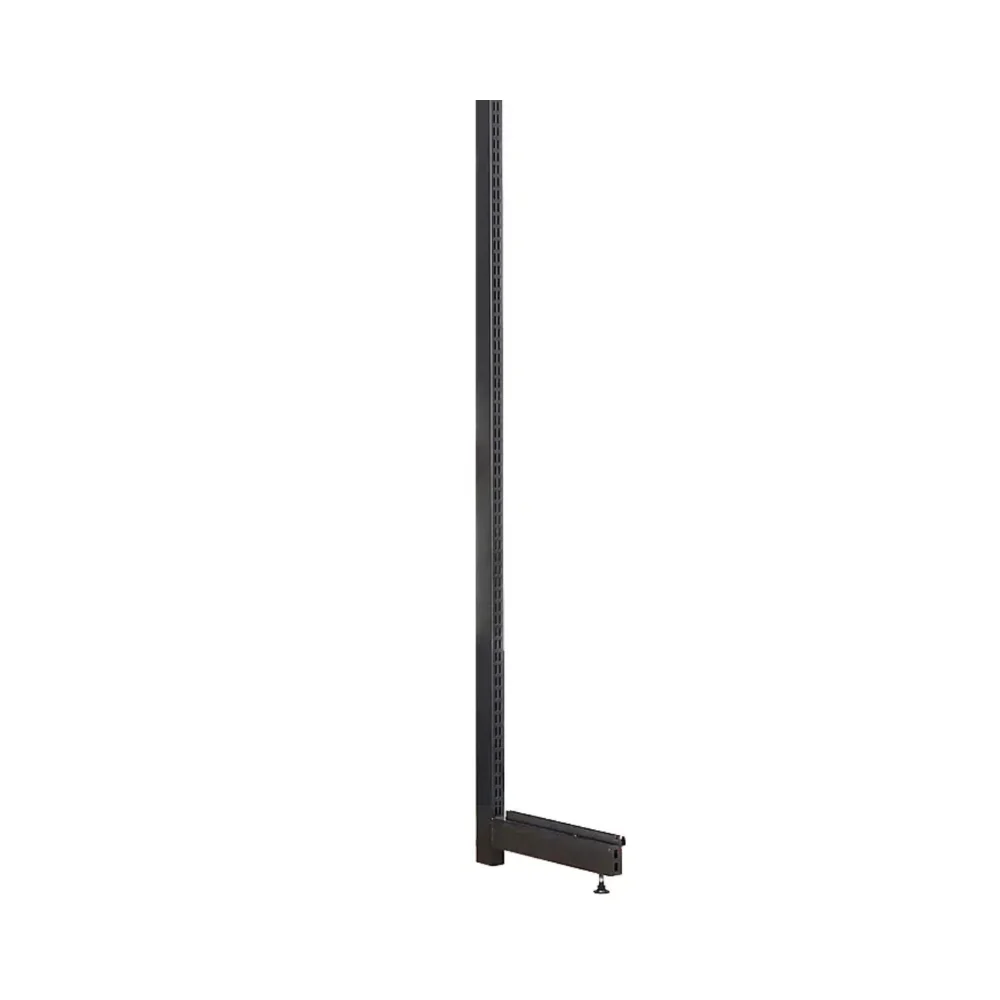
If shelves are the body of your storage system, the upright is the spine. A shelving upright is the heavy-duty vertical steel post or frame that anchors the entire structure to the ground and dictates the total height and depth capacity of your display.
Technical Specifications of Shop Solutions Midlands Uprights
The vertical columns feature precise engineering details that determine your system’s adaptability:
-
The Punch Pitch: Uprights are stamped with evenly spaced slots or holes (often called a "pitch," typically measuring 25mm or 50mm). These slots allow you to adjust individual shelf heights without tools, tailoring the vertical space to the exact dimensions of your merchandise.
-
Profile Gauge: The thickness of the steel matters. Heavy retail applications utilize thick-gauge steel profiles to prevent buckling or bowing under uneven loads.
-
Double-Sided vs. Single-Sided: Depending on whether you are constructing a wall-facing run or a central double-sided island (gondola), uprights are configured to accept shelf brackets on one or both sides.
Without robust, precision-engineered vertical supports, even the strongest individual shelves will sag or compromise the safety of the entire aisle.
What Role Does a Unit Finisher Play in Retail Displays?
A unit finisher (frequently referred to in the industry as an end-of-run finisher, end panel, or finishing post) is the component used to cleanly close off a row of shelving.
When building a continuous run of modular shelving, adjacent bays share a middle upright to save cost and space. However, when you reach the very end of an aisle, you require a final, dedicated vertical component to secure the last set of shelves safely and present a clean, professional aesthetic to customers.
Benefits of Premium End Finishers
-
Structural Completion: It mechanically locks the final bay of the run, distributing weight evenly and ensuring lateral stability.
-
Polished Aesthetics: It hides raw interior punch holes, exposed brackets, and structural framing from customer view, elevating the visual appeal of your retail space.
-
Branding Opportunities: Many Shop Solutions Midlands finishers can be retrofitted with custom timber laminate wraps, pegboards, or slatwalls to turn the end of an aisle into a high-margin promotional display zone.
How Do You Choose Between Starter Bays and Extension Bays?
Understanding how structural parts interact is key to a cost-effective installation. Commercial configurations are divided into two primary categories:
| Bay Type | Components Included | Ideal Placement |
| Starter Bay | Requires two standalone uprights, base feet, and shelves. | The mandatory first unit of any new freestanding row or aisle. |
| Extension Bay | Requires only one upright, as it hooks directly into the existing starter bay's upright. | Used sequentially to extend the row to any desired length. |
By utilizing this configuration, a row of five connected bays only requires six vertical frames instead of ten. The unit finisher acts as the definitive end cap to this sequence, structurally balancing the final extension bay.
Frequently Asked Questions About Commercial Modular Racking
How much weight can a standard Shop Solutions Midlands unit support?
Weight capacity depends largely on the configuration. Our standard light-to-medium retail units comfortably support 90kg to 150kg per level. For heavy industrial or cash-and-carry warehouse applications, reinforced pallet and longspan systems can support up to 1,000kg per bay. Always ensure your floor slab can handle the total aggregated weight.
Can I mix and match components from different manufacturers?
While many modular systems look identical on the surface, punch-hole shapes, hook angles, and pitch measurements vary between brands. We highly recommend using uniform Shop Solutions Midlands components throughout a single run to guarantee perfect mechanical locking and maintain strict structural safety compliance.
What finish is best for high-humidity or cold-storage environments?
For cold rooms, commercial kitchens, or garden centers, standard painted steel can corrode over time. We advise selecting either heavy-duty galvanized steel, chrome wire configurations, or specialized antibacterial powder-coated finishes designed specifically to resist moisture, rust, and chemical cleaning agents.
Maximize Your Space Efficiency Today
Optimizing your commercial layout requires a strategic blend of structural durability and visual clarity. By understanding how the core components—from modular units and slotted vertical uprights to clean end finishers—work together, you can design an agile environment that drives sales and streamlines inventory management.
Ready to transform your floor plan? Contact the expert team at Shop Solutions Midlands today for tailored advice, custom layouts, and premium storage hardware engineered to scale alongside your business.

 English
 Arabic
 French
 Spanish
 Portuguese
 Deutsch
 Turkish
 Italiano
 Russian
 Romaian
 Portuguese (Brazil)
 Greek
Greek