


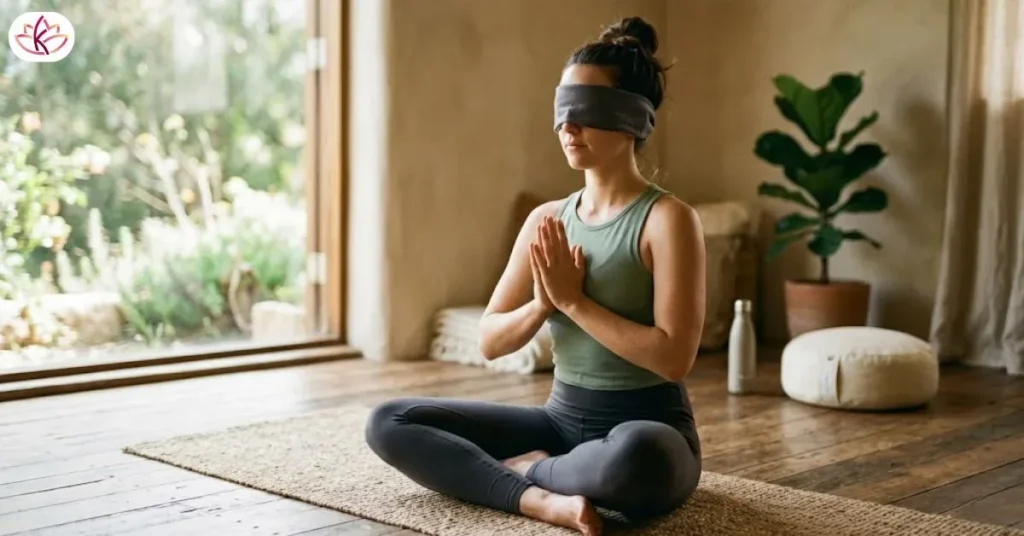
Introduction to Blindfold Yoga
What is Blindfold Yoga? It is a unique and mindful form of yoga practice where participants wear a blindfold during selected poses, breathing exercises, meditation, or even throughout an entire session. The purpose of this practice is not simply to remove sight, but to deepen awareness of the body, breath, and mind without relying on visual distractions.
In traditional yoga, practitioners often use mirrors, visual alignment, and external focus points to guide movement. Blindfold Yoga changes this experience completely by encouraging individuals to turn inward and strengthen their connection with their internal sensations. As the eyes are covered, the body begins to rely more heavily on balance, intuition, breath control, and mental concentration. This creates a powerful opportunity for self-discovery, emotional clarity, and enhanced mindfulness.
The Core Philosophy Behind Blindfold Yoga
The philosophy behind Blindfold Yoga is closely connected to the ancient yogic principle of pratyahara, which refers to the withdrawal of the senses. In modern life, people are constantly surrounded by visual stimulation from screens, advertisements, social media, and busy environments. Blindfold Yoga offers a rare chance to disconnect from external distractions and focus entirely on the inner self.
By removing visual input, practitioners often notice subtle sensations in the muscles, changes in breathing patterns, and emotional responses that may otherwise go unnoticed. This inward focus can lead to a deeper meditative state and help individuals become more aware of their thoughts, habits, and physical tension. For many practitioners, the experience becomes not just a physical workout but also a mental and emotional journey.
Benefits of Practicing Blindfold Yoga
One of the main reasons people become interested in learning What is Blindfold Yoga is because of its wide range of benefits. Physically, it can improve balance, posture, coordination, and body awareness. Since the practitioner cannot rely on visual references, the muscles and nervous system work harder to maintain stability. This strengthens proprioception, which is the body’s ability to sense movement and positioning. Mentally, Blindfold Yoga encourages concentration and mindfulness.
Many people report feeling calmer, more centered, and emotionally balanced after a session. The practice can also reduce stress and anxiety by helping individuals disconnect from overstimulation and focus on breathing techniques. Emotionally, Blindfold Yoga may bring hidden feelings to the surface, allowing practitioners to release tension and experience greater emotional freedom. Over time, this can create increased confidence, self-trust, and mental clarity.
How Blindfold Yoga Sessions Are Structured
A typical Blindfold Yoga session usually begins with grounding exercises and guided breathing practices to help participants feel safe and comfortable before putting on the blindfold. Instructors often use calm verbal cues to guide students through movements and poses. Simple poses such as Mountain Pose, Child’s Pose, Cat-Cow Stretch, and seated meditation are commonly practiced in the beginning stages. As students gain confidence, more challenging standing poses and balance exercises may be introduced.
The absence of sight makes even familiar poses feel completely new, encouraging practitioners to move slowly and mindfully. In some sessions, music, sound healing, or meditation techniques may also be incorporated to deepen relaxation and sensory awareness. The overall atmosphere is usually peaceful and supportive, allowing participants to explore movement without fear of judgment or comparison.
Who Can Practice Blindfold Yoga?
Blindfold Yoga is suitable for many different types of people, from beginners to experienced yoga practitioners. It can be especially beneficial for individuals seeking stress relief, mindfulness, emotional healing, or deeper meditation experiences. However, beginners are generally encouraged to start with basic poses under the guidance of a qualified instructor to ensure safety and comfort.
People recovering from injuries or those with balance-related conditions should practice carefully and may need modifications. Because the practice emphasizes awareness and inner focus rather than perfection, it creates a non-competitive environment where participants can explore yoga at their own pace. Many people find Blindfold Yoga refreshing because it removes the pressure of appearance and allows them to focus purely on personal experience and growth.
The Growing Popularity of Blindfold Yoga
In recent years, interest in mindful wellness practices has increased significantly, leading more people to ask, What is Blindfold Yoga and why is it becoming popular? Modern lifestyles often create mental fatigue and sensory overload, causing individuals to search for practices that encourage stillness and inner peace.
Blindfold Yoga stands out because it offers a deeply immersive experience that combines movement, meditation, and self-awareness. Wellness retreats, yoga studios, and mindfulness programs are increasingly introducing Blindfold Yoga classes as people seek more meaningful ways to reconnect with themselves. The practice appeals to those who want more than physical exercise and are looking for emotional balance, mental clarity, and spiritual growth through yoga.

 English
 Arabic
 French
 Spanish
 Portuguese
 Deutsch
 Turkish
 Dutch
Dutch
 Italiano
 Russian
 Romaian
 Greek
Greek