


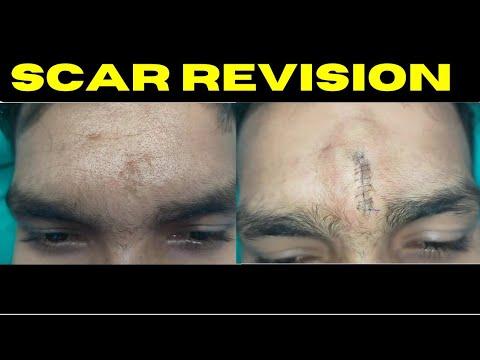
The Ultimate Guide to Surgical Scar Revision in Riyadh
Navigating the path to skin restoration requires a comprehensive understanding of the structural and biological principles that govern wound healing, particularly when considering Surgical Scar Revision Riyadh. A scar is more than a surface-level blemish; it is a complex replacement of normal skin with fibrous collagen tissue. While the body's primary goal during injury is to close a wound quickly to prevent infection, this "emergency" repair often results in tissue that is thick, discolored, or restrictive. Surgical revision is the clinical process of "resetting" this repair mechanism. By physically removing the old, disorganized collagen and performing a precision, tension-free closure, surgeons can guide the body to produce a much finer, flatter, and more harmonious mark that blends into the natural landscape of the skin.
Identifying Candidates for Surgical Intervention
Not every skin irregularity requires a surgical approach, but for certain types of tissue damage, surgery is the only definitive solution. Clinical candidates for revision typically present with one or more of the following:
-
Hypertrophic Scars: Raised, red, and firm scars that remain within the boundary of the original incision but cause a noticeable "rope-like" texture.
-
Keloid Scars: Overgrown fibrous tissue that extends beyond the initial wound site, often causing itching or pain.
-
Contractures: Scars that have tightened the skin, common after burns, which can restrict the movement of muscles or joints.
-
Atrophic (Sunken) Scars: Indented marks where the underlying fat or dermal support has been lost, often seen after severe acne or trauma.
-
Widened Scars: Thin, shiny scars that have stretched out due to excessive tension during the initial healing phase.
Core Surgical Techniques: The Toolkit of Restoration
The "ultimate" success of a revision depends on selecting the right mechanical approach for the specific scar type. Modern reconstructive surgery utilizes a variety of geometric and structural maneuvers.
-
Simple Excision: The surgeon removes the old scar and carefully brings the healthy skin edges together. This is ideal for scars that are wide but have enough surrounding skin laxity to allow for a "tension-free" closure.
-
Z-Plasty and W-Plasty: These are "irregularization" techniques. By creating small triangular flaps and rearranging them, the surgeon can change the direction of a scar to follow natural skin folds (Langer’s lines) or break up a long straight line into a zig-zag that is harder for the human eye to detect.
-
Undermining and Subcision: This involves separating the skin from the underlying deep tissue. Undermining reduces the pull on the wound edges, while subcision severs the vertical "tethers" that cause a scar to look sunken or pitted.
-
Skin Grafting and Flaps: For large areas of damage where local skin is insufficient, tissue is moved from a donor site. Flaps are preferred for complex areas as they carry their own blood supply, providing a more natural contour and better long-term durability.
The Science of Layered Closure
The secret to a "seamless" result lies beneath the surface. A single row of stitches is rarely enough to prevent a scar from widening. Instead, a multi-layered engineering approach is used.
-
Deep Dermal Support: Long-lasting, absorbable sutures are placed in the deep layers of the skin. These stitches do the "heavy lifting," holding the tension of the body's movements so the top layer remains relaxed.
-
Epidermal Approximation: Once the foundation is secure, the very top layer of skin is joined with sutures finer than a human hair. Because there is no tension on this layer, the risk of "railroad track" marks is virtually eliminated.
-
Eversion: Surgeons intentionally pucker the wound edges slightly upward. As the scar naturally contracts over the first few months, this ridge flattens out perfectly.
Environmental Factors and Post-Operative Maturation
In the specific climate of the region, managing the "micro-environment" of the healing incision is a critical component of the revision process.
-
Occlusive Healing: Utilizing medical-grade ointments and specialized dressings keeps the site moist. A moist wound environment allows skin cells to migrate across the revision site faster than a dry, crusty one, leading to a smoother texture.
-
UV Shielding: Freshly revised skin lacks the protective melanin of mature skin. Exposure to the sun can cause permanent darkening (hyperpigmentation). Rigid adherence to physical sunblocks and protective clothing is mandatory for at least six months.
-
Silicone Stabilization: Once the initial incision has closed, silicone gel or sheeting is applied. This provides a semi-occlusive barrier that hydrates the tissue and signals the body to stop producing "excess" collagen, keeping the scar flat and soft.
The Timeline of Transformation
Individuals must have realistic expectations regarding the "biological clock" of scar maturation. A surgical revision is a journey, not an instant fix.
-
Weeks 1-2: Sutures are removed. The site will appear red and slightly raised.
-
Months 1-3: The "remodeling" phase begins. The scar may feel firm as new collagen is deposited.
-
Months 6-12: The scar begins to soften and the redness fades.
-
Year 1-2: The scar reaches its final "mature" state—typically a pale, supple, and thin line that moves naturally with the rest of the skin.
Summary of the Reconstructive Path
The ultimate goal of Surgical Scar Revision in Riyadh is to restore the skin's original harmony and function. By combining advanced geometric planning, meticulous internal suturing, and a disciplined post-operative regimen, individuals can move beyond the visible reminders of past trauma. Whether it is releasing a restrictive burn contracture or refining a wide surgical mark, the focus is always on creating a stable, inconspicuous result that restores both the appearance and the confidence of the individual. Through these medically optimized steps, the skin's surface can be effectively "re-engineered" for a more natural and refined future.

 English
 Arabic
 French
 Spanish
 Portuguese
 Deutsch
 Turkish
 Dutch
Dutch
 Italiano
 Russian
 Romaian
 Portuguese (Brazil)