


Introduction
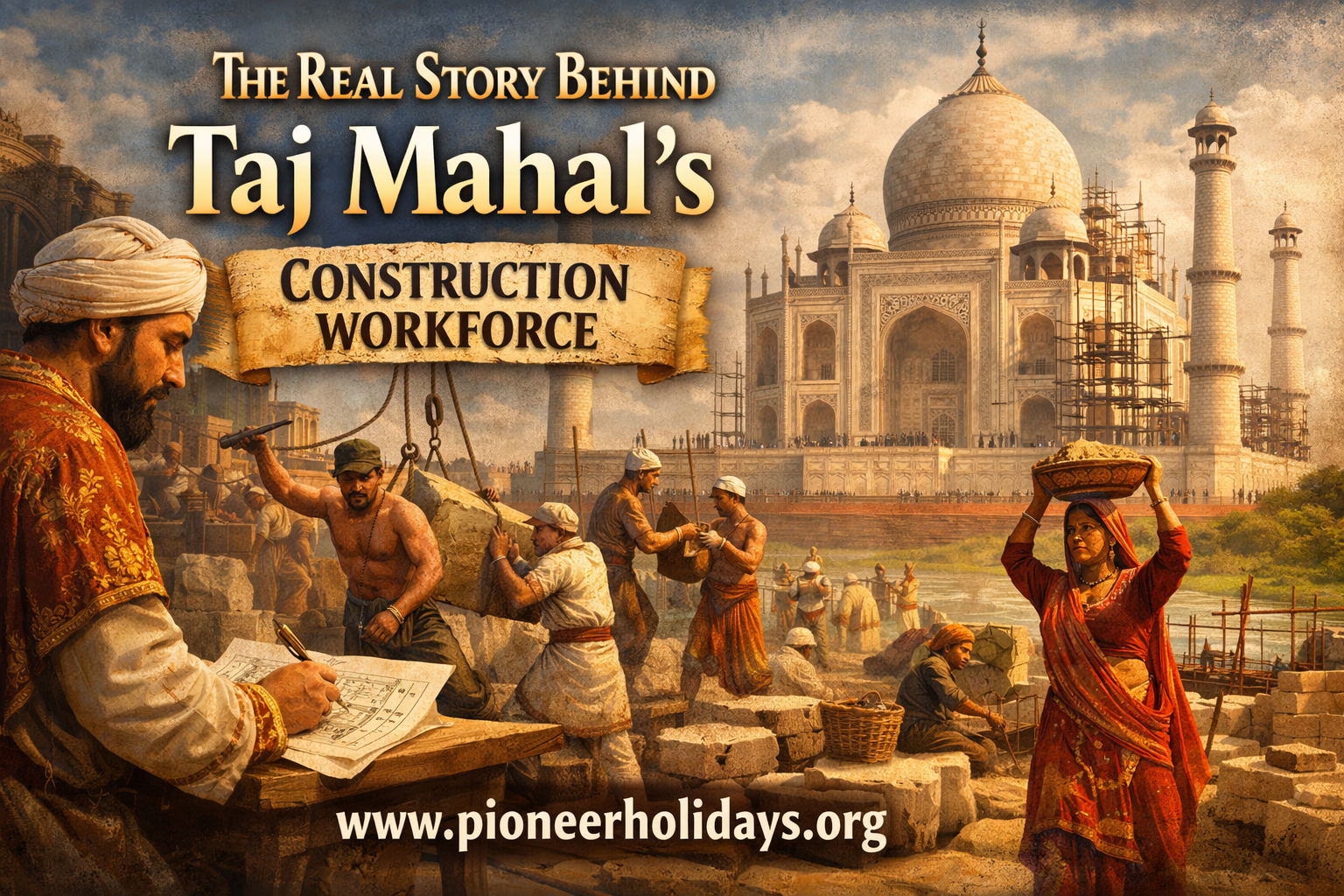
Imagine a monument born from love, sweat, and the unyielding spirit of thousands—that's the Taj Mahal's hidden heartbeat. The Taj Mahal stands as one of the world's greatest wonders, a shimmering white marble icon in Agra, India, drawing millions yearly. But behind its flawless symmetry lies a gritty tale of human endurance: the workforce that built it. Commissioned by Emperor Shah Jahan in 1632 as a tribute to his wife Mumtaz Mahal, this project wasn't just architecture—it was a symphony of 20,000 souls toiling under the Mughal sun. Unlock the untold saga of these forgotten heroes who carved eternity from stone.
In this deep dive, we'll explore the recruitment, daily grind, innovations, and lasting legacy of the Taj's builders. Drawing from historical records like the Padshahnama and UNESCO archives, we'll reveal how these artisans transformed grief into grandeur. Prepare to see the Taj not as marble, but as muscle and memory.
The Mughal Vision: Shah Jahan's Ambitious Call to Arms
Shah Jahan's grief after Mumtaz's death in 1631 ignited a building frenzy. He didn't just want a tomb; he envisioned immortality. One emperor's sorrow mobilized an empire's might.
The project kicked off in 1632 on the Yamuna River's banks, spanning 17 years until 1648, with finishing touches into the 1650s. Official chronicles note over 20,000 workers, blending Mughal patronage with imported genius. Architects like Ustad Ahmad Lahori led the charge, but the real stars were the laborers.
Recruitment spanned India, Persia, and beyond. From dusty villages to royal courts, hands converged for history's grandest canvas.
-
Skilled Artisans: Master masons, stone carvers, and jewel inlayers from across Asia.
-
Laborers: Earth-movers, porters, and haulers from local Agra regions.
-
Specialists: Calligraphers for Quranic verses and painters for intricate designs.
This diverse crew embodied the Mughal melting pot, united by Shah Jahan's decree and generous wages (paid in silver rupees).
Recruitment: Gathering a Workforce from Empires Wide
Sourcing talent was no small feat in the 17th century. Shah Jahan's ministers scoured the subcontinent and Central Asia. Talent hunts turned nomads into nation-builders overnight.
Persian and Turkish experts arrived via overland routes, bringing techniques like pietra dura (semi-precious stone inlays). Indian craftsmen from Rajasthan and Gujarat supplied marble mastery. Historical texts, including Abdul Hamid Lahori's accounts, detail how villages emptied as families joined the payroll.
Women played subtle roles too—grinding mortar, weaving scaffolds, and even polishing stones. Behind every marble slab, women's grit gleamed unspoken.
A key table outlines the workforce breakdown, based on Mughal records:
This structure ensured efficiency, with daily musters preventing desertions.
Daily Life: Toil Under the Relentless Sun
Dawn broke with conch shells; work stretched till dusk. Sun-scorched backs bent, but dreams of legacy straightened spines.
Laborers hauled 1,000 elephants' worth of materials yearly—marble from 200 miles away via the Yamuna. Scaffolds of bamboo rose 100 feet, defying gravity. Meals were simple: lentils, flatbreads, and yogurt, with royal kitchens feeding the masses.
Challenges abounded. Monsoons turned sites to mudslides; dust storms choked lungs raw.
Health woes hit hard—malaria, dysentery, accidents from falls. Yet, Shah Jahan's hospitals and physicians set precedents for worker welfare. Poetry from the era praises their resilience: "Hands that hew heaven from hellish heat."
Living Quarters: From Tents to Township
Temporary camps evolved into a bustling town. Mud huts sprouted markets, mosques, and merriment amid the grind.
Families relocated, creating a micro-society with bazaars selling spices and silks. Nights brought storytelling around fires, weaving folklore into the monument's soul.
Innovations and Techniques: Craftsmanship That Defied Limits
The workforce didn't just build; they innovated. Raw hands forged engineering marvels still baffling modern minds.
Marble arrived in blocks via ox carts and rivers. Workers used wooden rails greased with ghee for transport— a low-tech logistics win. The dome's perfect acoustics? Master masons tuned it like an instrument.
Pietra dura dazzled: 28 gem types inlaid flawlessly. Fingers nimble as spiders spun rainbows into stone.
Bullets highlight key techniques:
-
Brick Rubbing: Temporary bricks filled arches during construction, rubbed away post-hardening for seamless marble.
-
Centering: Massive wooden frameworks for the dome, dismantled without a single collapse.
-
Water Management: Canals from the Yamuna cooled the site and floated heavy loads.
-
Symmetry Tools: Strings and plumb lines ensured mirror-image perfection across the complex.
These methods, chronicled in Taj Mahal: The Illumined Tomb, showcase pre-industrial genius.
The Role of Animals and Logistics
Elephants, oxen, and camels were co-workers. Beasts of burden shared the glory, hauling what humans couldn't dream.
Over 20 years, logistics synchronized 1,000+ carts daily, a supply chain rivaling today's projects.
Challenges and Sacrifices: The Human Cost of Eternity
Perils defined the era. Falls from heights, stone crushes—each scar etched the Taj's foundation.
Estimates suggest 1,000-5,000 deaths, though myths of mass executions are debunked by historians like Ebba Koch. Harsh weather, poor sanitation, and overwork took tolls, yet morale stayed high via festivals and bonuses.
Shah Jahan's oversight included rest days and Eid celebrations. Rulers rewarded loyalty; workers repaid with unwavering zeal.
Social dynamics added layers—caste tensions dissolved in shared purpose, fostering unity rare for the time.
Legacy: Echoes of the Workforce in Modern India
Completed in 1653, the Taj endures, but so does its builders' spirit. Their sweat soaks the stones; their stories inspire wanderers today.
Descendants of artisans still guard secrets in Agra workshops. UNESCO's 1983 listing honors this heritage, preserving techniques. Modern Taj Mahal tour from Delhi revive their narrative, blending history with adventure.
Pioneer Holidays crafts immersive journeys, spotlighting these unsung tales. Step into their world, where every arch whispers resilience.
The workforce's model influenced forts like Red Fort, proving labor's power in empire-building.
Modern Tributes and Preservation
Today's efforts echo their ingenuity. Restoration teams use ancient methods to fend off pollution.
Initiatives train local youth, passing the torch.
Conclusion
The Taj Mahal's real story pulses through its construction workforce—a tapestry of 20,000 lives weaving love into legacy. From emperor's vision to artisans' victory, they built not just a tomb, but timeless triumph.
Shah Jahan's grief birthed beauty, but these workers' grit granted immortality. Visit Agra to feel their echo; their hands still hold the monument aloft. In every minaret's shadow, humanity's heroism shines eternal.
FAQ
Who led the Taj Mahal's construction workforce?
Ustad Ahmad Lahori served as chief architect, overseeing 20,000 workers with a team of deputies. One man's blueprint, thousands' triumph.
How many people built the Taj Mahal?
Historical accounts confirm around 20,000, including masons, laborers, and specialists over 22 years. A human army sculpted paradise.
What materials did the workforce use?
Primarily white Makrana marble, red sandstone, and gems like jasper and lapis lazuli, sourced nationwide. Earth's treasures, humanely transformed.
Were there any women in the Taj Mahal workforce?
Yes, in support roles like polishing and logistics, though records focus on male artisans. Unsung sisters strengthened the spectacle.
How long did the construction take?
Main structure: 1632-1648 (16 years); full complex by 1653, with minarets later. Patience carved perfection.
What innovations did the workforce introduce?
Techniques like brick rubbing and wooden centering ensured structural marvels without modern tools. Ancient hacks birthed wonders.

 Arabic
 French
 Spanish
 Portuguese
 Deutsch
 Turkish
 Dutch
Dutch
 Italiano
 Russian
 Romaian
 Portuguese (Brazil)
 Greek
Greek