


As temperatures continue to rise in many parts of the world, maintaining a comfortable indoor environment has become increasingly important. An air conditioner (AC) plays a vital role in regulating indoor temperature, improving air quality, and creating a pleasant living or working space. Today, AC systems are widely used in homes, offices, educational institutions, and commercial buildings.
Modern air conditioners are designed not only to cool spaces but also to improve air circulation, control humidity, and enhance overall indoor comfort.
What Is an Air Conditioner (AC)?
An air conditioner is a device that removes heat and humidity from indoor air to create a cooler and more comfortable environment. It works by circulating refrigerant through a system that absorbs heat from the room and releases it outside.
Most AC systems include key components such as a compressor, condenser, evaporator coil, and refrigerant. Together, these components help maintain consistent cooling while ensuring efficient energy usage.
Types of Air Conditioners
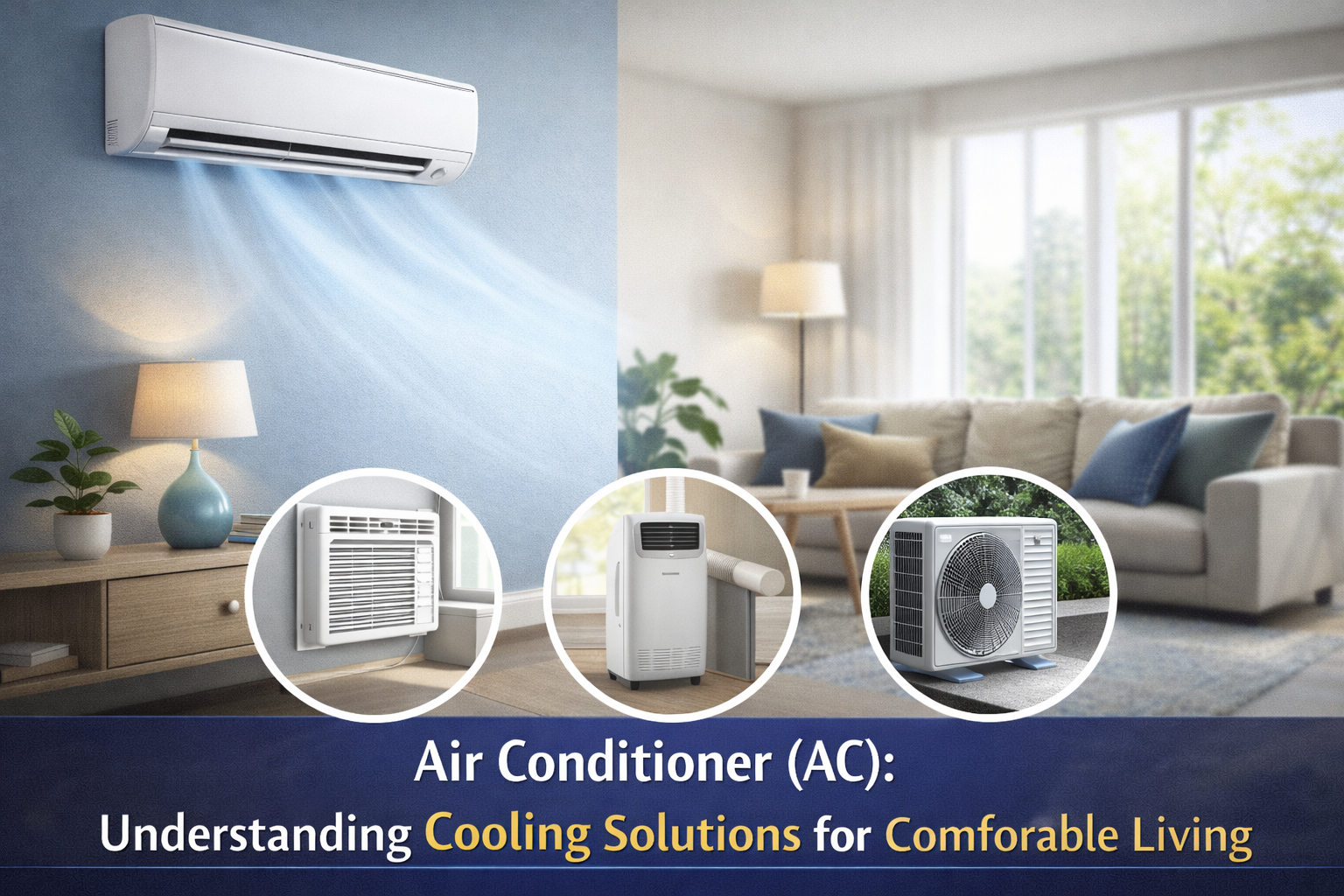
There are several types of air conditioners available, each designed to suit different space requirements and usage needs.
Window AC:
Window air conditioners are compact units installed in windows or walls. They are commonly used in small rooms and apartments due to their affordability and easy installation.
Split AC:
Split air conditioners consist of an indoor unit and an outdoor compressor. They are popular for homes and offices because they offer efficient cooling with quieter operation.
Portable AC:
Portable air conditioners can be moved from room to room. They are suitable for temporary cooling needs or spaces where permanent installation is not possible.
Central AC:
Central air conditioning systems are designed for large buildings or homes. They distribute cool air through ducts and provide consistent temperature control across multiple rooms.
Benefits of Using an Air Conditioner
Using an AC offers several advantages beyond just cooling a room.
-
Maintains comfortable indoor temperatures during hot weather
-
Improves indoor air circulation and ventilation
-
Helps reduce humidity levels inside buildings
-
Enhances productivity and comfort in workplaces
-
Supports better sleep quality in hot climates
With advancements in technology, modern air conditioners also include energy-efficient features and smart controls for better performance.
Choosing the Right AC for Your Space
Selecting the right air conditioner depends on factors such as room size, energy efficiency, cooling capacity, and budget. It is important to consider the tonnage capacity, energy rating, and installation requirements before purchasing an AC unit.
Energy-efficient models with higher star ratings can help reduce electricity consumption while maintaining effective cooling performance.
Conclusion
An air conditioner (AC) has become an essential appliance in modern living, especially in regions with warm climates. By understanding the different types of AC systems and their benefits, individuals can choose a cooling solution that meets their comfort and energy needs.
As technology continues to evolve, air conditioners are becoming more efficient, environmentally friendly, and capable of delivering better indoor comfort for homes and workplaces.

 English
 Arabic
 French
 Spanish
 Deutsch
 Turkish
 Dutch
Dutch
 Italiano
 Russian
 Romaian
 Portuguese (Brazil)
 Greek
Greek