


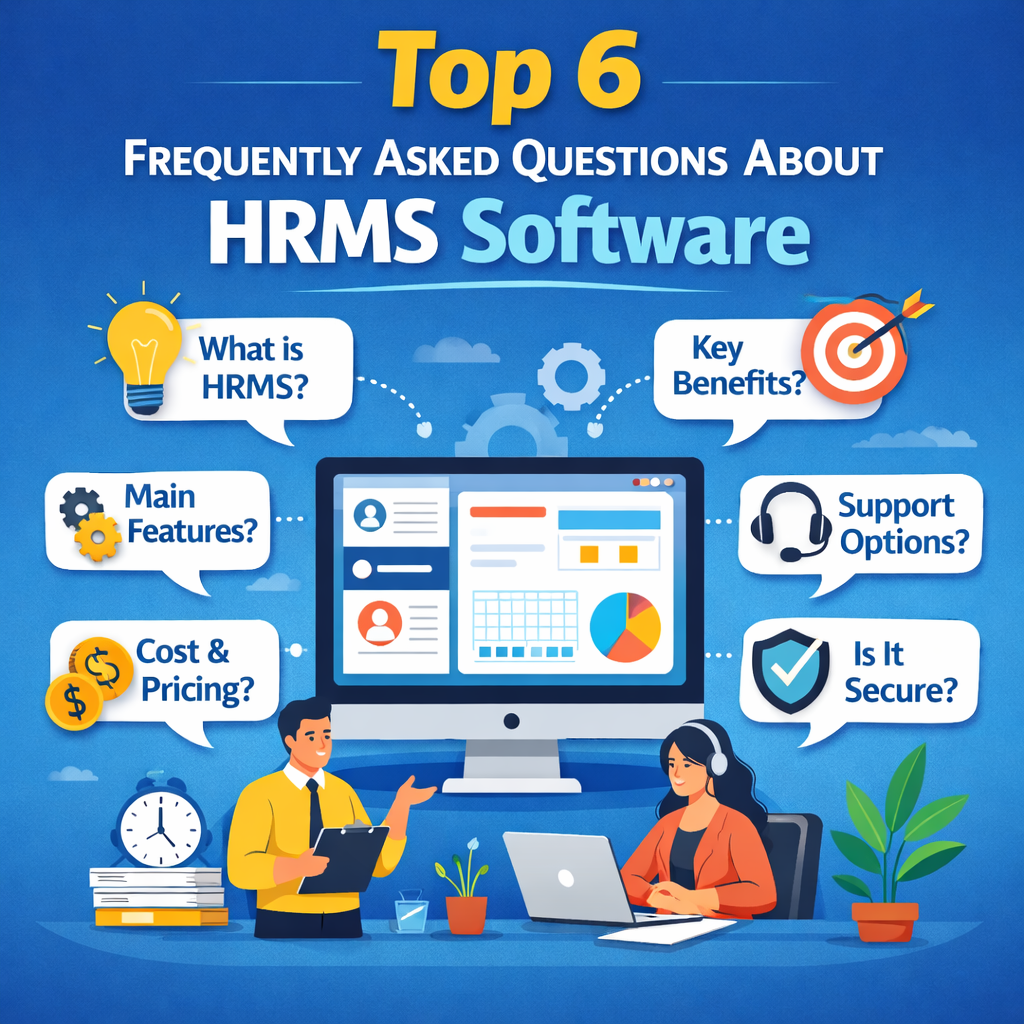
As a company grows, managing employees can be more difficult. It is the area where an HRMS is beneficial. HRMS stands for Human Resource Management System. It is software that assists companies in managing employee data, payroll, attendance, recruiting, and other HR work in a single system.
Several company owners and HR teams have similar questions before using an HRMS. Below are six frequently asked questions about HRMS, explained in simple wording.
1. What is an HRMS?
An HRMS is a digital system that helps companies manage employees more easily. Instead of using paperwork or spreadsheets, HR teams can manage everything from one platform. It usually includes employee records, attendance tracking, payroll processing, leave management, and performance tracking. An HRMS helps save time and reduces manual effort.
2. Who should use an HRMS?
An HRMS is helpful for small, medium, and large businesses. Even startups can use it once they begin hiring employees.
If a company wants to keep employee data organized, reduce mistakes, and improve HR work, an HRMS is a good solution. It also allows HR teams to focus more on employees and less on paperwork.
3. What are the main features of an HRMS?
Most HRMS platforms offer the following features:
-
Employee information management
-
Attendance and leave tracking
-
Payroll and tax calculation
-
Recruitment and onboarding
-
Performance reviews
-
Reports and analytics
Some advanced HRMS tools also include training management, employee self-service options, and compliance tracking.
4. How does an HRMS help businesses save time?
An HRMS automates many daily HR tasks. Attendance is tracked automatically, payroll is calculated quickly, and leave requests are approved online.
This reduces errors, speeds up processes, and helps HR teams finish work faster. As a result, businesses save both time and effort.
5. Is HRMS software secure?
Yes, most modern HRMS systems are built with strong security features. They use data encryption, secure login methods, and role-based access to protect employee information. Only authorized users can access sensitive data, which helps keep employee records safe and private.
6. Is it difficult to use an HRMS?
Most HRMS platforms are easy to use and user-friendly. They come with simple dashboards and clear instructions. Many systems also offer training, tutorials, and customer support.
Employees can easily check attendance, download payslips, and apply for leave without needing help from HR.
Conclusion
An HRMS makes employee management simpler, faster, and more organized. It helps businesses reduce manual work, improve accuracy, and create a better employee experience.Understanding these frequently asked questions about HRMS can help you decide if it is the right solution for your business. With the right HRMS, companies can focus more on growth and managing people instead of paperwork.

 English
 Arabic
 French
 Spanish
 Portuguese
 Deutsch
 Turkish
 Italiano
 Russian
 Romaian
 Portuguese (Brazil)
 Greek
Greek