


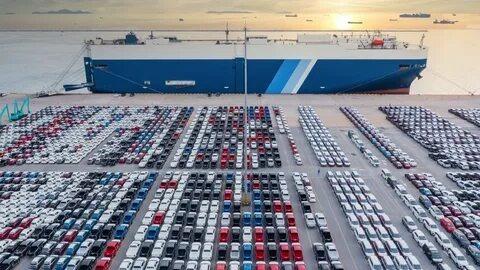
Imagine the ease of driving your car onto a massive, floating parking garage, knowing that when the journey ends hundreds or thousands of miles away, you—or its new owner—will simply drive it off, ready for the road. This isn’t a futuristic concept; it’s the elegant, efficient, and established reality of roll on roll off shipping, the undisputed champion of global automobile transport. For anyone involved in moving vehicles across oceans, from collectors and emigrants to dealerships and manufacturers, understanding this process is the key to a successful, secure, and stress-free relocation of a prized vehicle.
While the term might sound technical, the principle is beautifully simple. It represents the most direct interface between land and sea transport, turning complex logistics into a streamlined drive-through experience. This article will serve as your comprehensive guide, navigating the ins and outs of how roll on roll off services work, why they are the preferred choice for vehicle shipping, and what you need to know to ensure your car’s voyage is as smooth as the seas it travels.
The Anatomy of a Roll on Roll Off Operation
A roll on roll off shipment is a masterclass in logistical efficiency. The process begins not at the dock, but with careful preparation. A professional shipping agent will ensure your vehicle is “RoRo-ready,” which involves a meticulous inspection to document its condition, ensuring it is mechanically sound for driving short distances, and that it meets all safety and environmental regulations for ocean travel. This includes having only a minimal amount of fuel in the tank and a secured battery.
On the day of loading, your car is driven to the designated port terminal by a certified handler. There, it awaits its turn alongside a diverse convoy of other vehicles—from compact cars and family SUVs to luxury sedans and vintage classics. The star of the show is the specialized roll on roll off vessel, often a Pure Car Carrier (PCC) or a Pure Car and Truck Carrier (PCTC). These ships are engineering marvels, essentially multi-story, seafaring garages with massive stern or side doors.
When the doors open, a heavy-duty ramp is deployed, creating a stable bridge from the quayside directly into the vessel’s interior. In a carefully orchestrated sequence, drivers navigate each vehicle onboard, where they are expertly directed to a precise parking spot on one of many decks. The internal design often features complex networks of fixed and hydraulic decks that can be adjusted in height to maximize space, accommodating everything from low-sportscars to tall 4x4s. Once positioned, each vehicle is individually secured using a tailored system of wheel nets, straps, and chains, locking it firmly to the deck to withstand the motion of the ocean.
The Unbeatable Advantages of the Roll on Roll Off Method for Cars
Why has roll on roll off become the gold standard for international car shipping? The answer lies in a powerful combination of safety, efficiency, and practicality that alternative methods struggle to match.
A Foundation of Enhanced Safety and Security
The most significant benefit is the unparalleled protection offered to your vehicle. Unlike methods that involve cranes or containerization, your car remains on its own wheels from the moment it leaves the terminal until it arrives at its destination. This eliminates the risks associated with lifting—such as sling pressure or accidental impact—and avoids the confined, potentially abrasive interior of a shipping container. The professional lashing performed by experienced crews is designed to hold the vehicle immobile, even in heavy seas. Furthermore, once the vessel’s doors are sealed for transit, the cargo decks become highly secure, access-controlled environments, offering significant peace of mind.
The Efficiency That Saves Time and Stress
Speed of handling is a hallmark of the roll on roll off model. Loading and discharging hundreds of vehicles can be accomplished in a matter of hours, a fraction of the time required for other shipping methods. This rapid port turnaround translates to more predictable sailing schedules and faster overall transit times for your vehicle. The process is also remarkably clean and straightforward from a documentation perspective, as the car itself is the primary, easily identifiable shipment unit, simplifying customs and port formalities.
Purpose-Built for Automotive Cargo
Traveling on a vessel designed exclusively for vehicles offers inherent advantages. Pure Car Carriers feature advanced ventilation systems that circulate air throughout the decks, combating moisture and preventing musty odors or surface condensation. They are also equipped with state-of-the-art fire detection and suppression systems specifically calibrated for automotive cargo. This specialized environment ensures your car is transported in conditions that prioritize its well-being above all else.
Preparing Your Vehicle for Its Ocean Voyage
Success in roll on roll off shipping is a partnership between the shipper and the vehicle owner. Proper preparation is non-negotiable and hinges on a few critical steps.
First and foremost, the vehicle must be in good working order. It must be able to drive forward and backward under its own power for short distances to facilitate loading, parking, and unloading. A thorough cleaning, both inside and out, is recommended, as it allows for a more accurate pre-shipping inspection. This inspection report is a vital legal document that records the exact condition of the car before loading, complete with photographs, serving as a baseline for its condition upon arrival.
Perhaps the most important rule is the removal of all personal belongings. Due to stringent security regulations and insurance stipulations, no personal effects can be left in the vehicle’s interior, trunk, or glove compartment. This includes aftermarket electronics, tools, or spare parts. An empty car is a secure car in the world of international shipping.
Demystifying the Journey: From Port to Port
Understanding the voyage can alleviate concerns. Once secured inside the vessel, your car begins its ocean transit. Modern roll on roll off fleets are equipped with advanced navigation technology, and captains use detailed weather routing to ensure as smooth a passage as possible, avoiding the most severe storms. The vessel itself is a stable, slow-moving environment, and the professional lashing is rigorously tested to handle standard sea conditions.
Upon arrival at the destination port, the process reverses in a carefully managed discharge operation. After customs clearance is completed, a final inspection is typically conducted to compare the vehicle’s condition against the original report. From there, your vehicle is ready to be driven off the vessel and can be arranged for collection at the port or delivered directly to your door, concluding its seamless journey across the sea.
The Trust Factor: Choosing Your Shipping Partner
The complexity of international logistics means that your choice of a shipping partner is paramount. Look for an agent with proven expertise in roll on roll off procedures, who communicates clearly about the entire process, requirements, and timelines. They should handle all documentation, from the bill of lading to customs paperwork, and provide transparent tracking and updates. A reputable partner doesn’t just move your car; they manage your confidence throughout the entire experience.
Conclusion: Embracing the Modern Path of Vehicle Mobility
Roll on roll off shipping stands as the most refined, secure, and efficient method for transporting vehicles across the world’s oceans. It transforms a potentially daunting logistical challenge into a straightforward, driver-centric process. By combining the innate simplicity of the “drive-on, drive-off” concept with cutting-edge maritime technology and rigorous safety protocols, it provides an unparalleled service for the automotive world. Whether you are relocating, purchasing a vehicle abroad, or supporting a business in the automotive trade, entrusting your car to the roll on roll off highway of the sea is the smart, proven choice for a journey that is as reliable as it is remarkable.

 English
 Arabic
 French
 Spanish
 Portuguese
 Deutsch
 Turkish
 Dutch
Dutch
 Italiano
 Russian
 Romaian
 Greek
Greek