


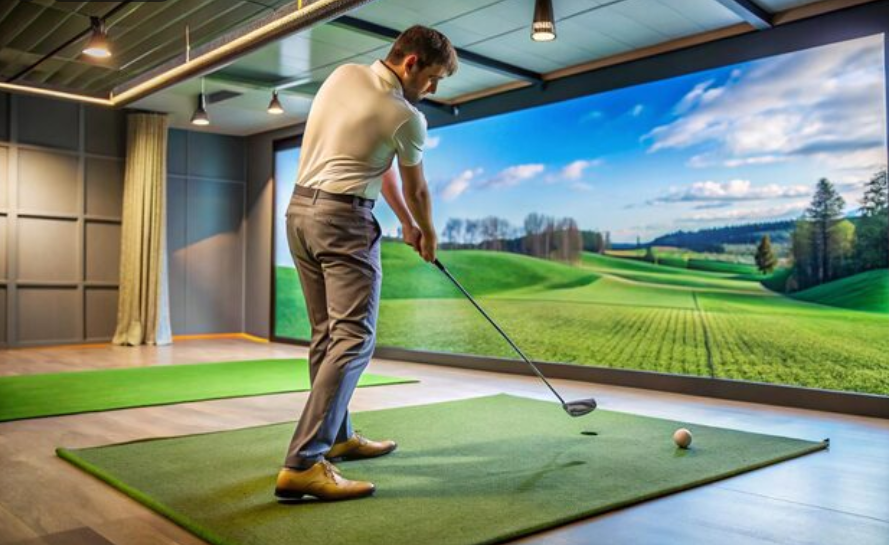
The popularity of home sports technology has surged in recent years, and golf enthusiasts are increasingly turning their attention indoors. A well-designed golf practice setup allows players to practice year-round, analyze their performance in detail, and enjoy immersive gameplay without stepping onto a course. Whether you are a beginner looking to improve consistency or an experienced golfer aiming to refine precision, setting up a Top Golf Simulator at home requires thoughtful planning and strategic choices.
This guide walks through every critical aspect of creating a high-performance home golf system, from space requirements and equipment selection to software optimization and maintenance tips.
Understanding the Benefits of a Home Golf Simulator
A home golf system offers more than convenience. It provides instant feedback on swing speed, ball trajectory, launch angle, and shot dispersion. Unlike traditional driving ranges, simulators offer controlled conditions, allowing you to track progress with accuracy.
Key advantages include:
-
Practice in any weather or season
-
Data-driven performance improvement
-
Access to virtual courses and training modes
-
Long-term cost savings compared to frequent course visits
With the right setup, a Top golf practice setup can replicate real-world golfing conditions while delivering enhanced analytical insights.
Choosing the Right Space for Your Simulator
Space planning is the foundation of a successful simulator setup. The size and layout of your room directly affect accuracy, safety, and comfort.
Ceiling Height
A minimum ceiling height of around 9 to 10 feet is ideal to allow a full swing without restriction. Taller players may require additional clearance.
Room Width and Depth
-
Width: At least 10 feet to accommodate a natural swing arc
-
Depth: 12 to 15 feet to allow safe ball travel and accurate tracking
Garages, basements, spare rooms, or dedicated indoor sports areas often work well. Proper lighting and ventilation also enhance comfort during extended practice sessions.
Selecting the Core Golf Simulator Components
A high-performance golf systemr relies on several essential components working together seamlessly.
Launch Monitor
The launch monitor is the brain of the system. It tracks ball speed, spin rate, club path, and launch angle. Accurate data capture is crucial for realism and effective training.
When aiming for a Top golf system experience, prioritize a launch monitor known for precision, low latency, and compatibility with advanced software.
Impact Screen
The impact screen must be durable enough to withstand repeated high-speed shots while delivering a clear visual display. High-quality screens reduce bounce-back and noise, improving both safety and immersion.
Projector
A high-resolution projector enhances realism by displaying detailed course visuals. Look for:
-
Short-throw capability
-
High brightness for well-lit rooms
-
Sharp image clarity
Proper alignment ensures the projected image fits perfectly on the impact screen.
Hitting Mat
A realistic hitting mat protects your joints and simulates real turf interaction. High-performance mats offer different turf textures to replicate fairway, rough, and tee shots.
Optimizing Software for Performance and Realism
The software platform determines how immersive and educational your golf practice setup experience will be.
Course Variety
Access to multiple virtual courses keeps practice sessions engaging and challenging. High-quality course rendering improves depth perception and shot visualization.
Practice and Training Modes
Look for software that includes:
-
Driving range simulations
-
Shot dispersion analysis
-
Skills challenges
-
Swing playback
Advanced analytics transform a standard golf system into a powerful training tool.
Customization Options
Being able to adjust wind, weather, green speed, and difficulty levels adds realism and allows targeted practice scenarios.
Sound, Lighting, and Environment Setup
Often overlooked, environmental factors play a significant role in simulator performance.
Lighting
Avoid harsh overhead lights that cause screen glare. Soft, indirect lighting improves visibility without interfering with ball tracking.
Soundproofing
Repeated ball strikes can be loud. Acoustic panels, foam padding, and impact curtains help reduce noise, especially in shared living spaces.
Flooring and Safety
Non-slip flooring around the hitting area enhances stability. Protective netting or side curtains prevent mis-hits from damaging walls or equipment.
Internet Connectivity and System Performance
A smooth and responsive Top golf system requires reliable connectivity and hardware.
Computer or Processing Unit
Ensure your system meets recommended specifications for graphics and processing speed. Lag or frame drops can reduce realism and data accuracy.
Stable Internet
Online features, software updates, and multiplayer modes depend on consistent internet performance. Wired connections often offer better stability than wireless options.
Calibration and Alignment for Maximum Accuracy
Even the most advanced Golf Simulator requires proper calibration to perform at its best.
Launch Monitor Placement
Position the monitor according to manufacturer guidelines, ensuring it aligns correctly with the hitting zone and target line.
Screen and Projector Alignment
Fine-tune projector focus and keystone settings so visuals match ball flight accurately.
Regular Recalibration
Periodic calibration ensures data remains precise, especially if equipment is moved or environmental conditions change.
Enhancing the Experience with Accessories
To elevate your setup into a Top golf system, consider optional accessories that add comfort and realism.
-
Club storage racks
-
Seating for spectators
-
Ball return systems
-
Touchscreen control panels
These enhancements improve usability and make your simulator space feel like a professional indoor golf studio.
Maintenance and Long-Term Care
Proper maintenance extends the life of your golf system and ensures consistent performance.
Screen and Mat Care
Regularly inspect for wear and tear. Clean surfaces to maintain image quality and ball response.
Software Updates
Keep software and firmware up to date to access new features and performance improvements.
Equipment Inspection
Check cables, sensors, and mounts periodically to prevent downtime and maintain accuracy.
Budget Planning and Value Optimization
While costs vary depending on equipment quality and room modifications, thoughtful budgeting ensures maximum value.
Prioritize Core Performance
Invest first in accurate tracking and durable materials. Visual enhancements can be upgraded later.
Modular Upgrades
Choose components that allow future expansion. This approach spreads costs over time while improving performance gradually.
A carefully planned golf system setup delivers long-term value, especially for frequent players and families who enjoy indoor entertainment.
Who Can Benefit Most from a Home Golf Simulator?
A home golf system suits a wide range of users:
-
Beginners learning fundamentals
-
Competitive players refining technique
-
Families seeking interactive entertainment
-
Professionals practicing consistently
With customization and scalability, it adapts to different skill levels and goals.
Final Thoughts
Setting up a home golf practice setup for maximum performance involves more than purchasing equipment. It requires careful space planning, smart component selection, software optimization, and ongoing maintenance. When executed correctly, a Top golf system transforms your home into a high-performance practice environment that rivals professional facilities.
By focusing on accuracy, comfort, and realism, you can create an indoor golf experience that enhances skill development, boosts enjoyment, and keeps you connected to the game year-round—no matter the weather or schedule.

 English
 Arabic
 French
 Spanish
 Portuguese
 Deutsch
 Dutch
Dutch
 Italiano
 Russian
 Romaian
 Portuguese (Brazil)
 Greek
Greek