


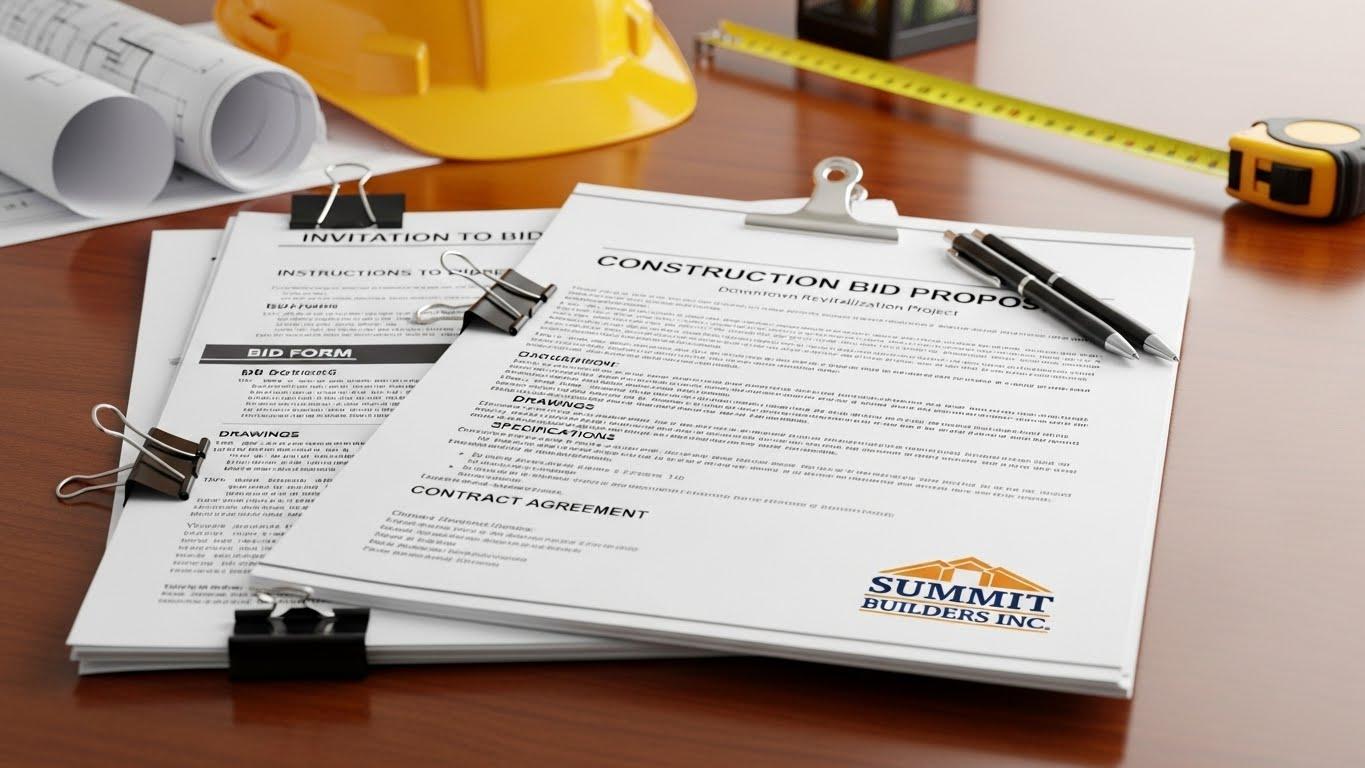
Building work is an industry that requires a lot of bid documentation. These documents are important for helping the owners decide who they want to hire. These documents also assist the builders in understanding what the owners want. It is easier to complete a project when the bid documentation is easy to understand. When bid documents aren't clear, the whole project feels slow. Every building project needs strong bid documentation.
Documents of the bidders guide both the contractor and the owner. It shows the rule, plan, amount of money, time needed, and other details. It helps to maintain fairness and honesty. By reading these documents, the builder can know how to proceed, when to end the project, and what steps to take. This can help prevent mistakes from occurring later.
Why Bid Documents Matter for Both Owners and Builders
Before the beginning of the building works, the bid documents represent the first major step. This helps owners determine the builder who is offering the best value. Due to the fact that all bids are based on identical information, this helps builders make fair and competitive offers. This ensures that the entire process is fair to everyone.
The owner compares the bid documents side-by-side. Every builder is compared on cost, expertise, schedule, and design. These papers are vital to the project. Without them, the owner is left in the dark. By using these papers, owners can make smart decisions that keep their projects safe.
Bid documents protect the builder as well. After the rules and regulations are written down, the builder will follow them. It is important that the contractor knows how big the job is, what materials are required, and when the deadlines will be. This will help the builder to plan, order, and finish work within the given time.
What are the main sections of a bid document?
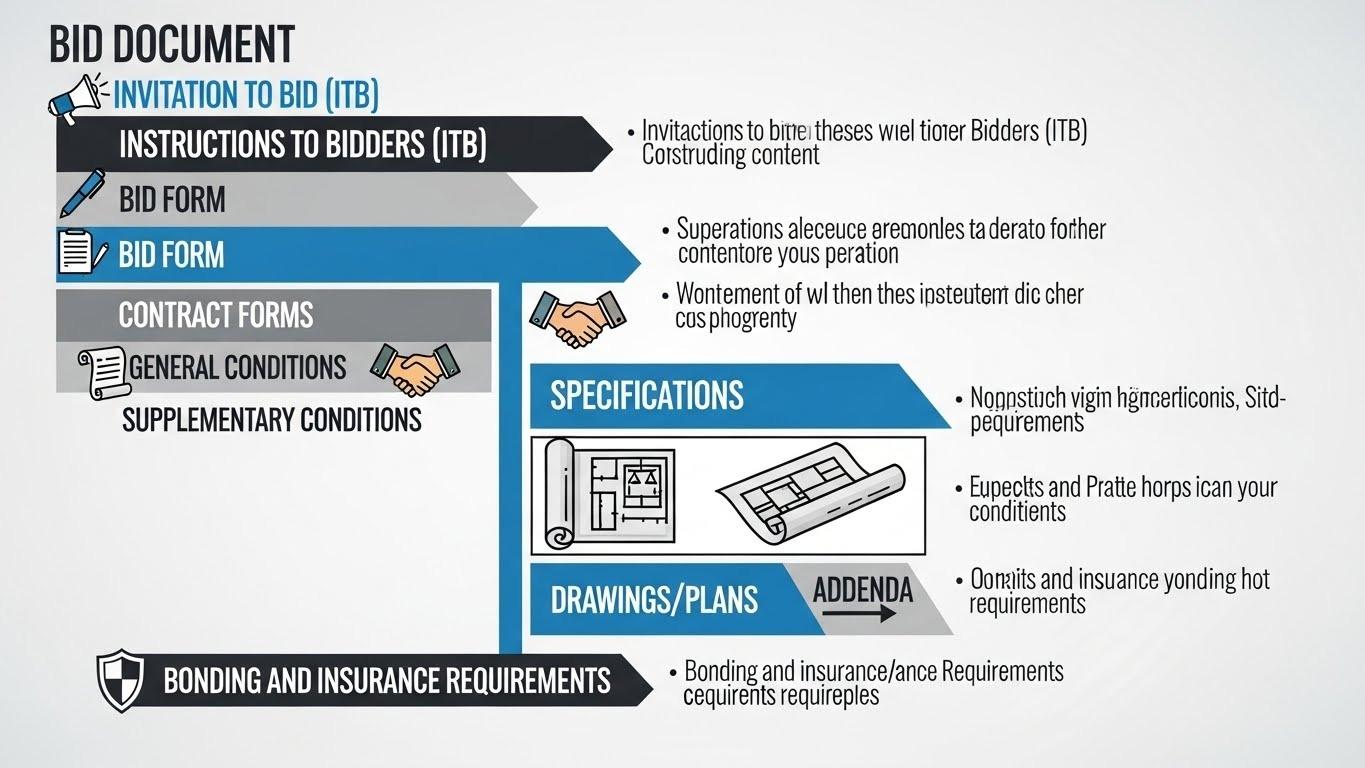
Each bid document is made up of several parts, and each section has a purpose. Each piece gives important details to the contractor. All builders read the information before making a tender. This is the basic structure of building documents.
Project Plans and Drawings
Project plans and drawings show the full picture of the building job. They show the shape, the size, and the parts of the building. They also show where each item will go. These drawings come from engineers and design experts. Builders study these papers to understand the job in detail. This helps the builder estimate the job in the right way.
In this part, builders also look deeply at cost estimating services because these services help the builder study the drawings, measure the items, and set the right cost values for the bid. Without a clear estimate, the builder may set a wrong price that brings loss or trouble later.
Invitation to Bid
This is a small document that informs builders when a new construction job becomes available. The document contains information such as the title of the construction project, its location, what type of work will be done, and when the final bid is due. It also tells how and where the builder will send in the bid. This is a welcome paper that lets you know the project's status. You may join."
Instructions For Bidders
It explains how to follow the rules. This section explains to the contractor how to use the form to place the bids, how list prices should be listed, and where to send the required documents. You can also find the exact date and time for the submission of the bid. These rules allow all builders to use the same process. This ensures that everyone is treated fairly.
Specifications
Specifications include detailed instructions that specify the type of materials, the methods, and the level of quality required. These papers explain the types of cement and steel, as well as the paint type and safety rules. It guides the builder in a step-by-step manner so they always use the right materials.
Specifications make it easier for builders to understand what owners expect. As well as helping to ensure the safety of work, specifications are also important. Projects move faster when specifications are well-written and clearly defined.
Bill Of Quantities
This is one of the most important parts. It shows all the items, work, and materials in tiny units. There are many other items listed, such as how many bricks there are, or the length of the pipe, wire size, etc. To set their price, builders will use the bill of quantities. Because every builder is using the same bill of quantities, the document helps in maintaining fairness during the bidding process.
This document also helps to explain the price of each item. Owners see exactly where their money goes, where they need to spend it, and where there are risks. It is a great service for planning and controlling.
Bid form
This form contains the sum of all the costs for the work. The bid form will contain the amount of money to spend on the job, as well as the materials cost and the timeline. This form will be signed by the constructor and sent in with the documents. This form explains in simple terms the offer of the builder.
Contract Papers
Legal rules are outlined in the contracts. These papers describe the legal rights and obligations of both owner and contractor. They detail the conditions of payment, dispute resolution, safety standards, work limits, and completion dates. These documents are for both parties' protection. If there are any disputes, the contract documents help guide the parties to a solution.
Contract papers often form the last portion of a bid document. After the owner chooses the constructor, these documents shape the final contract.
The Project Runs Smoothly By Using The Bid Documents

All phases of building are supported by bid documents. These documents can be used before, during, or after the work. Here are some ways they ensure the safety and success of your project.
Clear Details Reduce Mistakes
When written clearly, details can be followed by builders with ease. So, there are no more errors and guesswork. Also, this saves money, time, and materials.
Fair Process Builds Trust
Every builder receives the exact same information, so the process remains fair. In this way, owners can have confidence in the quotes they receive. Likewise, it helps the builders to have confidence in their client. This trust is crucial to the smooth running of the project.
Cost Control
Since bid documents also include rules and item lists, a builder's price is determined by real-world facts. A bid document can help prevent costs from increasing later. This also allows owners to better plan their own projects.
Time Planning Made Easy
The work plan and timeline are included in the documents. They can plan their workers, the services they will use, and even how to move around the job site. This allows the project to move smoothly.
How to Improve Bid Documents
Clearness is essential to the success of any bid document. They must use simple terms, provide full information, and have correct numbers. The paper must use simple words and avoid terms that confuse builders.
Owners could also display sample plans, items, or drawings. These samples help form a bid. If owners provide all details up front, it will stop disputes later on in the project.
Summary
Construction is not complete without the bidding documents. They provide guidance to the owners. They guide both the designer and builder. They guide the construction team. They guide the design team. In the absence of these documents, the project is likely to be slow. When bid documents are strong, they support fair bidding. They also promote safe jobs, strong quality work, and honest financial control. To put it simply, strong documents will help you win.
FAQs
In construction, what are the bid documents?
These documents give all details on a job to help builders submit fair bids.
What are the bid documents, and why are they important?
The services allow owners to control their finances, compare builders, and pick the best one.
How to read bid documents?
They can include drawings, itemized lists, contract documents, rules, forms, or other paperwork.

 English
 French
 Spanish
 Portuguese
 Deutsch
 Turkish
 Dutch
Dutch
 Italiano
 Russian
 Romaian
 Portuguese (Brazil)
 Greek
Greek