


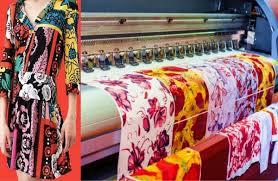
The textile and fashion industries are rapidly evolving, with new technologies reshaping the way fabrics are designed and produced. Among these innovations, digital printing on fabric has emerged as a game-changer. Unlike traditional printing methods such as screen printing or block printing, digital printing offers speed, flexibility, and precision while reducing waste. It allows designers and manufacturers to create vibrant, detailed, and customized designs directly onto fabric with the help of advanced inkjet technology.
In this article, we will explore what digital printing on fabric is, how it works, its advantages, applications, challenges, and future scope. Whether you are a textile manufacturer, fashion entrepreneur, or student of design, this guide will give you a clear understanding of this modern printing method.
What is Digital Printing on Fabric?
Digital printing on fabric refers to the process of using digital inkjet printers to apply designs directly onto textiles. Instead of relying on stencils, screens, or plates, the design is sent from a computer file to the printer, which sprays the ink directly onto the fabric’s surface.
This method enables printing with high resolution and unlimited color possibilities, making it ideal for both large-scale production and small customized runs.
How Does Digital Fabric Printing Work?
Design Preparation
The process begins with creating a design using software like Adobe Illustrator, Photoshop, or CAD tools. The design is then adjusted to match the fabric’s size and pattern requirements.
Fabric Pretreatment
To ensure the ink adheres well, fabrics are pretreated with a coating solution. This step enhances color vibrancy and prevents ink from spreading.
Digital Printing
Using specialized printers, the design is directly printed onto the fabric. The inkjet nozzles spray tiny droplets of dye or pigment inks with incredible accuracy.
Fixation and Curing
Heat or steam is applied to fix the inks onto the fabric permanently. This ensures durability, wash-fastness, and resistance to fading.
Washing and Finishing
Finally, the printed fabric is washed to remove excess chemicals and finished for softness, brightness, and smooth texture.
Types of Digital Printing on Fabric
-
Direct-to-Fabric (DTF) Printing
Prints directly on textiles, suitable for cotton, silk, polyester, and blends. -
Direct-to-Garment (DTG) Printing
Used for printing directly on finished garments like t-shirts or hoodies. -
Sublimation Printing
Works best on polyester fabrics, where inks turn into gas and bond with fibers. -
Reactive Printing
Used mainly for natural fibers like cotton and linen, offering deep penetration and long-lasting colors. -
Pigment Printing
Eco-friendly method suitable for multiple fabric types, requiring less water.
Advantages of Digital Printing on Fabric
-
High-Quality Output – Provides sharp, detailed prints with millions of color shades.
-
Customization – Perfect for small runs, personalized designs, and unique patterns.
-
Eco-Friendly – Consumes less water and ink compared to traditional methods.
-
Faster Production – No need for screen preparation; designs can be printed instantly.
-
Unlimited Creativity – Designers can experiment with gradients, photographic prints, and complex motifs.
Applications of Digital Fabric Printing
-
Fashion Industry – Custom clothing, designer collections, and fast fashion.
-
Home Furnishings – Curtains, bedsheets, cushion covers, and upholstery fabrics.
-
Sportswear – High-performance printed jerseys and activewear.
-
Promotional Items – Customized bags, t-shirts, and accessories.
-
Interior Design – Wall hangings, banners, and decorative fabrics.
Challenges in Digital Fabric Printing
While the technology is revolutionary, it comes with certain challenges:
-
High Equipment Costs – Industrial-grade printers are expensive to purchase and maintain.
-
Fabric Limitations – Not all fabrics are compatible without pretreatment.
-
Color Consistency – Achieving perfect color matching can be difficult.
-
Ink Cost – Specialized inks are more costly compared to traditional printing inks.
Future of Digital Printing in the Textile Industry
With increasing demand for sustainable, fast, and customized production, digital printing is set to dominate the textile industry. Advances in printer technology, eco-friendly inks, and automation are expected to make digital printing more affordable and widespread.
The rise of on-demand fashion, where customers can order personalized clothing online, will further boost the importance of digital fabric printing. Additionally, sustainability goals in the fashion industry make digital printing a preferred choice due to its reduced water and energy consumption.
FAQs on Digital Printing on Fabric
What fabrics are best for digital printing?
Digital printing works best on cotton, silk, polyester, viscose, and blends. Polyester is commonly used for sublimation printing.
Is digital printing eco-friendly?
Yes. Digital printing uses less water, produces minimal waste, and reduces harmful chemical use compared to traditional methods.
How durable is digital fabric printing?
When properly fixed and cured, digital prints are durable and can withstand regular washing without fading.
What is the difference between screen printing and digital printing?
Screen printing requires separate screens for each color and is better for bulk production, while digital printing allows detailed, multicolor designs without setup costs, making it ideal for customization.
Can digital printing handle photographic images?
Yes. Digital printing is capable of reproducing detailed photographs, gradients, and complex patterns with excellent clarity.
Conclusion
Digital printing on fabric has transformed the way textiles are designed, produced, and marketed. It combines creativity, efficiency, and sustainability, making it an essential technology for the future of fashion and interior design. Although challenges like high costs and fabric limitations exist, ongoing innovations are bridging these gaps.
As the demand for personalized, fast, and eco-friendly textile solutions continues to grow, digital fabric printing will play a pivotal role in shaping the global textile industry. For designers, businesses, and consumers alike, this technology represents not just a trend, but the future of fabric printing.

 Arabic
 French
 Spanish
 Portuguese
 Deutsch
 Turkish
 Dutch
Dutch
 Italiano
 Russian
 Romaian
 Portuguese (Brazil)
 Greek
Greek