


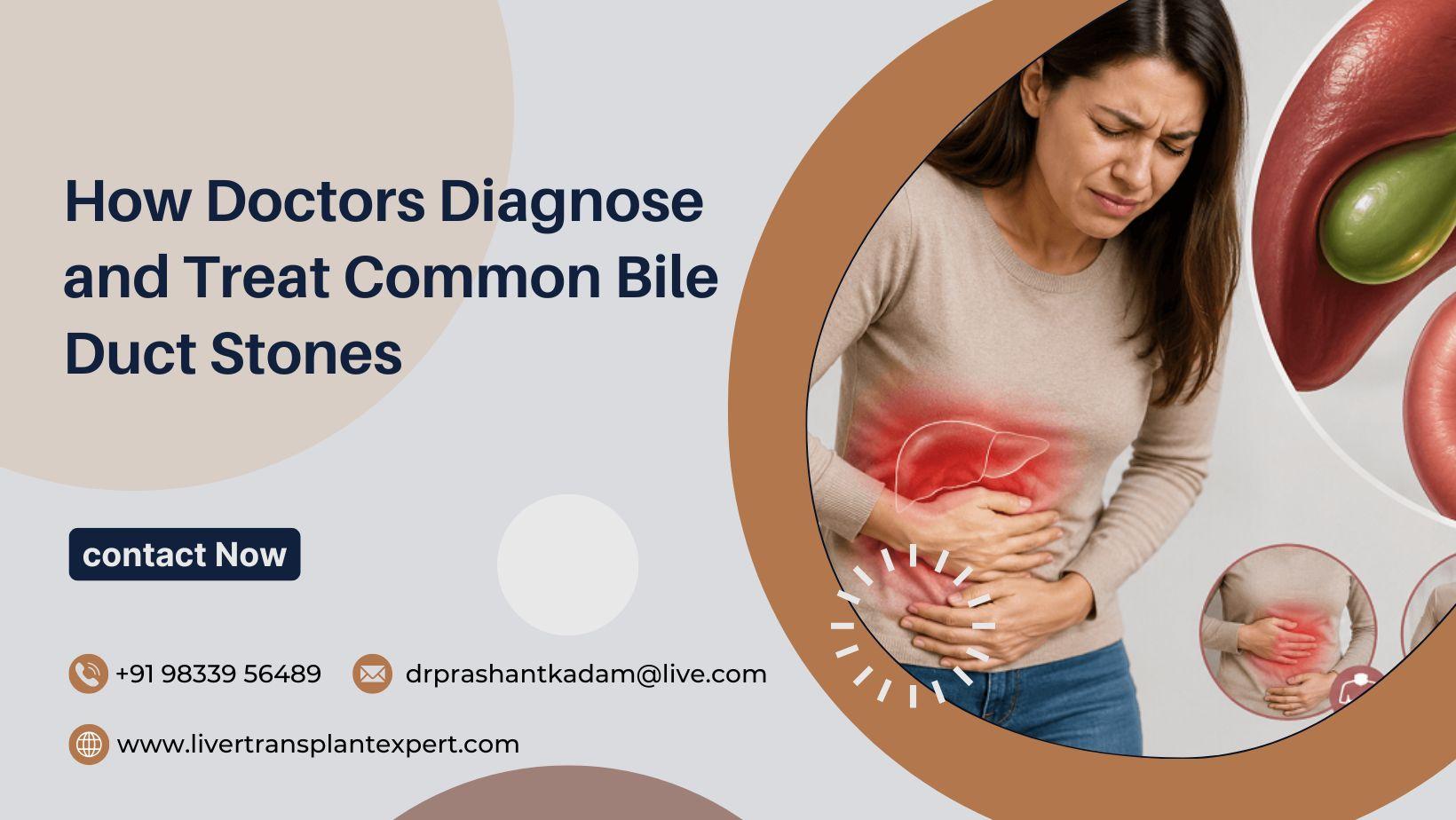
Common bile duct (CBD) stones occur when stones block the common bile duct, preventing bile from flowing normally from the liver and gallbladder to the small intestine. If left untreated, they can lead to complications such as jaundice, bile duct infection (cholangitis), pancreatitis, or liver damage. Early diagnosis and timely stone in CBD treatment play an important role in preventing these complications and improving recovery.
Doctors use a combination of clinical evaluation, laboratory tests, imaging studies, and minimally invasive procedures to confirm the diagnosis and choose the most suitable treatment. Modern advances in CBD stone treatment allow most patients to recover safely with excellent outcomes.
Recognising the Symptoms
The first step in diagnosis is identifying Common bile duct stone symptoms. While some people may not experience symptoms initially, others develop signs when the bile duct becomes partially or completely blocked.
Common symptoms include:
- Pain in the upper right or middle abdomen
- Yellowing of the skin and eyes (jaundice)
- Fever and chills
- Dark urine
- Pale stools
- Nausea and vomiting
- Loss of appetite
If these symptoms appear, prompt medical evaluation is important because delayed treatment can increase the risk of serious complications.
Medical History and Physical Examination
Doctors begin by reviewing the patient's medical history and performing a physical examination. They ask about previous gallstones, gallbladder disease, liver conditions, abdominal surgery, and the duration of symptoms.
During the examination, doctors look for signs of jaundice, abdominal tenderness, fever, and other indications of bile duct obstruction. These findings help determine which diagnostic tests are needed.
Blood Tests
Blood tests provide valuable information about liver function and possible infection.
Doctors commonly order:
- Liver function tests (LFTs)
- Bilirubin levels
- Complete blood count (CBC)
- Pancreatic enzyme tests if pancreatitis is suspected
Abnormal liver enzyme levels or elevated bilirubin may indicate blockage of the bile duct, although additional imaging is usually required to confirm the diagnosis.
Imaging Tests
Imaging studies help locate the stone, assess its size, and determine whether complications are present.
An abdominal ultrasound is often the first imaging test because it is safe, widely available, and effective for detecting gallstones and bile duct enlargement.
If more detailed images are needed, doctors may recommend Magnetic Resonance Cholangiopancreatography (MRCP). MRCP produces detailed pictures of the bile ducts without the need for surgery or radiation.
Endoscopic Ultrasound (EUS) is another highly accurate technique that detects small stones that may not appear on standard ultrasound.
Computed Tomography (CT) scans may also be used when doctors need to evaluate complications or rule out other abdominal conditions.
These investigations help specialists select the most appropriate Common bile duct stone treatment.
How Doctors Treat CBD Stones
The primary goal of stone in CBD treatment is to remove the blockage and restore normal bile flow while preventing infection and further complications.
For most patients, Endoscopic Retrograde Cholangiopancreatography (ERCP) is the preferred treatment. During ERCP, a flexible endoscope passes through the mouth into the small intestine, allowing specialists to access the bile duct. Small instruments are then used for Common bile duct stone removal, often during the same procedure.
ERCP is considered the standard treatment for most CBD stones because it is minimally invasive and avoids the need for open surgery in many patients.
When Surgery Is Needed
Although ERCP is highly effective, some patients require Surgery for CBD stones. Surgery may be recommended when stones cannot be removed endoscopically, multiple large stones are present, or gallbladder removal is needed at the same time.
Laparoscopic surgery is usually preferred because it involves smaller incisions, less postoperative pain, and faster recovery. Open surgery may be necessary for complex cases or when minimally invasive treatment is not suitable.
The choice of treatment depends on the patient's overall health, imaging findings, and the complexity of the condition.
Recovery and Follow-Up
Most patients recover well after CBD stone treatment. Recovery after ERCP is generally quicker than recovery after surgery, although both approaches require follow-up care.
Doctors advise patients to take prescribed medications, stay hydrated, gradually resume normal eating, and attend follow-up appointments. Patients should seek immediate medical attention if they develop fever, severe abdominal pain, persistent vomiting, or jaundice after treatment.
Regular follow-up helps ensure complete healing and identifies any recurrence at an early stage.
Expert Care for CBD Stones
Patients seeking CBD stone treatment in India have access to advanced diagnostic technology, experienced gastroenterologists, and specialised hepatobiliary surgeons. Accurate diagnosis and timely intervention significantly improve treatment outcomes.
For patients with complex biliary disorders, Dr Prashant Kadam, an experienced hepatobiliary surgeon and liver transplant expert, provides comprehensive evaluation and evidence-based treatment tailored to each patient's condition.
Conclusion
Successful management of CBD stones begins with early recognition of Common bile duct stone symptoms and an accurate diagnosis using blood tests and advanced imaging. Modern stone in CBD treatment includes minimally invasive endoscopic procedures and surgery when required. Prompt Common bile duct stone treatment not only relieves symptoms but also reduces the risk of serious complications, helping patients return to normal health with appropriate medical care and follow-up.

 English
 Arabic
 Spanish
 Portuguese
 Deutsch
 Turkish
 Dutch
Dutch
 Italiano
 Russian
 Romaian
 Portuguese (Brazil)
 Greek
Greek