


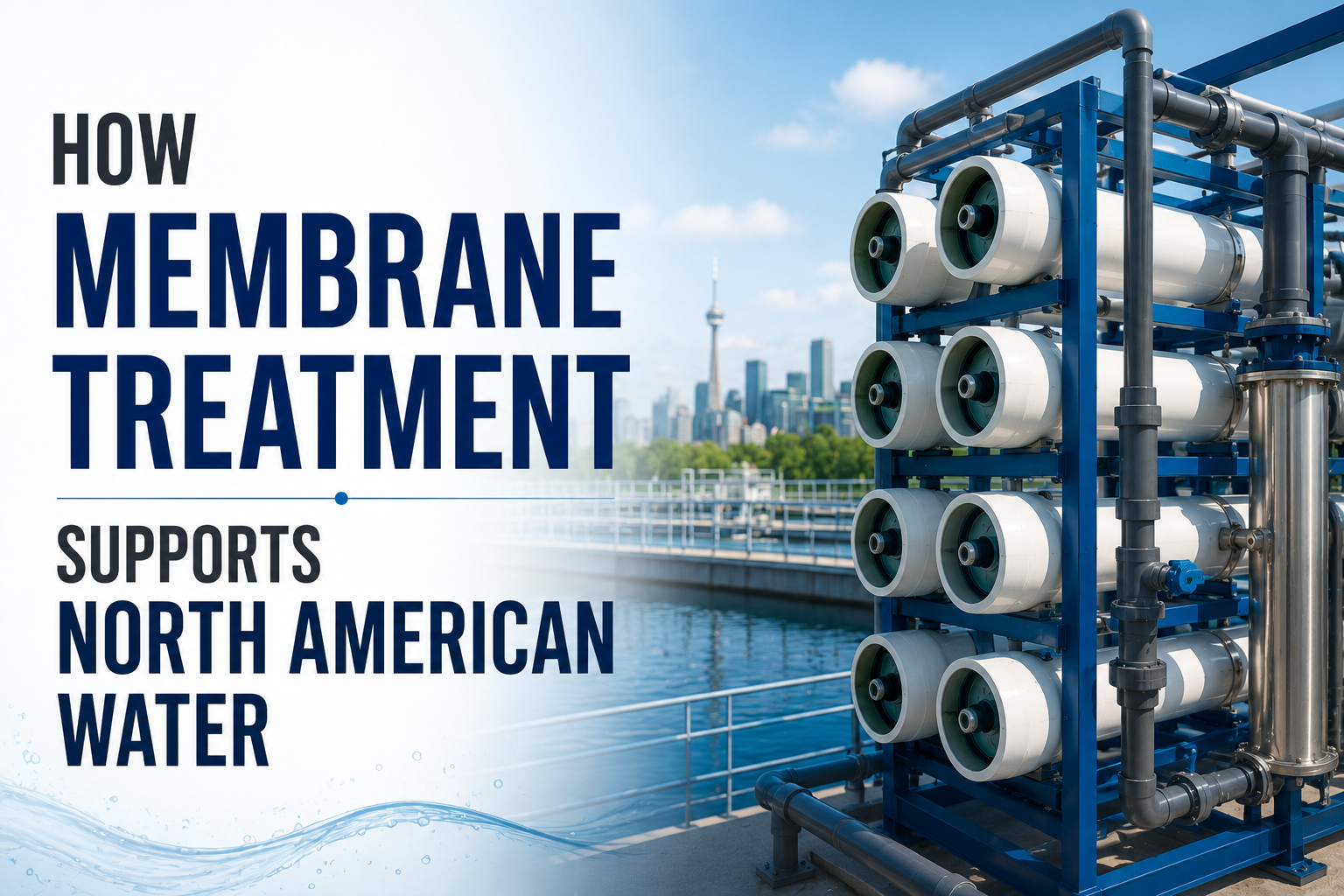
Membrane water and wastewater treatment is becoming important across North America as utilities, industries, municipalities, and commercial facilities face rising expectations for water quality, reuse, and reliable purification. Membrane systems use semi-permeable barriers to separate contaminants from water. Technologies such as microfiltration, ultrafiltration, nanofiltration, reverse osmosis, and membrane bioreactors support drinking water treatment, wastewater polishing, desalination, industrial reuse, and advanced contaminant removal.
A recent study by MarkNtel Advisors highlights that the North America membrane water and wastewater treatment industry was valued at USD 5.50 billion in 2025. It is projected to reach USD 5.83 billion in 2026 and USD 8.27 billion by 2032, reflecting a CAGR of 6.00%. This growth is driven by advanced water purification needs, infrastructure modernization, and stringent environmental regulations.
Advanced Purification Drives Adoption
Membrane systems are used when conventional treatment alone may not be enough to meet specific quality goals. They can help remove suspended solids, microorganisms, dissolved salts, organic compounds, and selected emerging contaminants depending on the membrane type and treatment design. EPA’s overview of drinking water treatment technologies explains membrane processes by describing permeate as the treated water that passes through the membrane.
This makes membrane treatment relevant for utilities and industries seeking more consistent water quality. Microfiltration and ultrafiltration are often used for particle and microbial removal, while nanofiltration and reverse osmosis are used where finer separation is needed. The technology is especially useful when water sources are stressed by industrial discharge, salinity, pathogens, or changing raw-water conditions.
Infrastructure Modernization Supports Demand
Many North American water systems are upgrading treatment plants, distribution networks, wastewater facilities, and reuse infrastructure. Aging assets, population growth, stricter quality expectations, and climate-related stress are increasing the need for more resilient treatment solutions. EPA’s Clean Watersheds Needs Survey assesses future clean water infrastructure investment needs to support Clean Water Act water quality objectives over a long-term planning horizon.
Membrane systems can be integrated into both new and upgraded facilities. Utilities may use them to expand treatment capacity, improve effluent quality, support reuse, or meet tighter discharge requirements. Industrial users may install membrane systems to recover process water, reduce freshwater intake, or meet customer and regulatory expectations around water stewardship.
Wastewater Reuse Gains Importance
Water reuse is becoming more relevant in areas facing drought, groundwater stress, or rising demand from industry and urban development. Membrane treatment can support reuse by improving effluent quality before water is applied to non-potable or industrial uses. In some facilities, membrane bioreactors combine biological treatment with membrane filtration to produce higher-quality treated water in compact plant footprints.
Reuse projects require careful treatment design because water quality needs vary by application. Cooling towers, irrigation, industrial washing, groundwater recharge, and indirect potable reuse all require different performance levels. Membranes can be paired with disinfection, activated carbon, ion exchange, or advanced oxidation depending on the contaminants and intended end use.
Regulations Shape Treatment Decisions
Regulatory requirements are a major factor in North American water and wastewater treatment investment. In the United States, EPA’s NPDES permit program regulates point sources such as wastewater treatment plants that discharge into waters of the United States. Permit limits and compliance expectations encourage facilities to use treatment technologies that can deliver reliable performance under changing operating conditions.
Canada also maintains wastewater discharge requirements. Environment and Climate Change Canada’s Wastewater Systems Effluent Regulations address wastewater systems under the Fisheries Act framework. These regulatory structures support continued investment in treatment upgrades, monitoring systems, and technologies that improve effluent quality across municipal and industrial sites.
PFAS and Emerging Contaminants Add Pressure
Emerging contaminants are increasing interest in advanced treatment. PFAS, pharmaceuticals, industrial chemicals, and other persistent compounds can require specialized removal approaches. EPA’s research on PFAS treatment in drinking water and wastewater identifies high-pressure membrane systems among technologies known to be effective for PFAS removal in treatment applications.
The future of membrane water and wastewater treatment in North America will depend on cost, energy efficiency, membrane life, fouling control, brine management, and skilled operations. As utilities and industries modernize infrastructure, membrane systems are likely to remain important for advanced purification, reuse, discharge compliance, and resilience. Their long-term value will come from balancing treatment performance with practical operating costs and environmental responsibility.

 English
 Arabic
 French
 Spanish
 Portuguese
 Deutsch
 Turkish
 Dutch
Dutch
 Italiano
 Russian
 Romaian
 Greek
Greek