


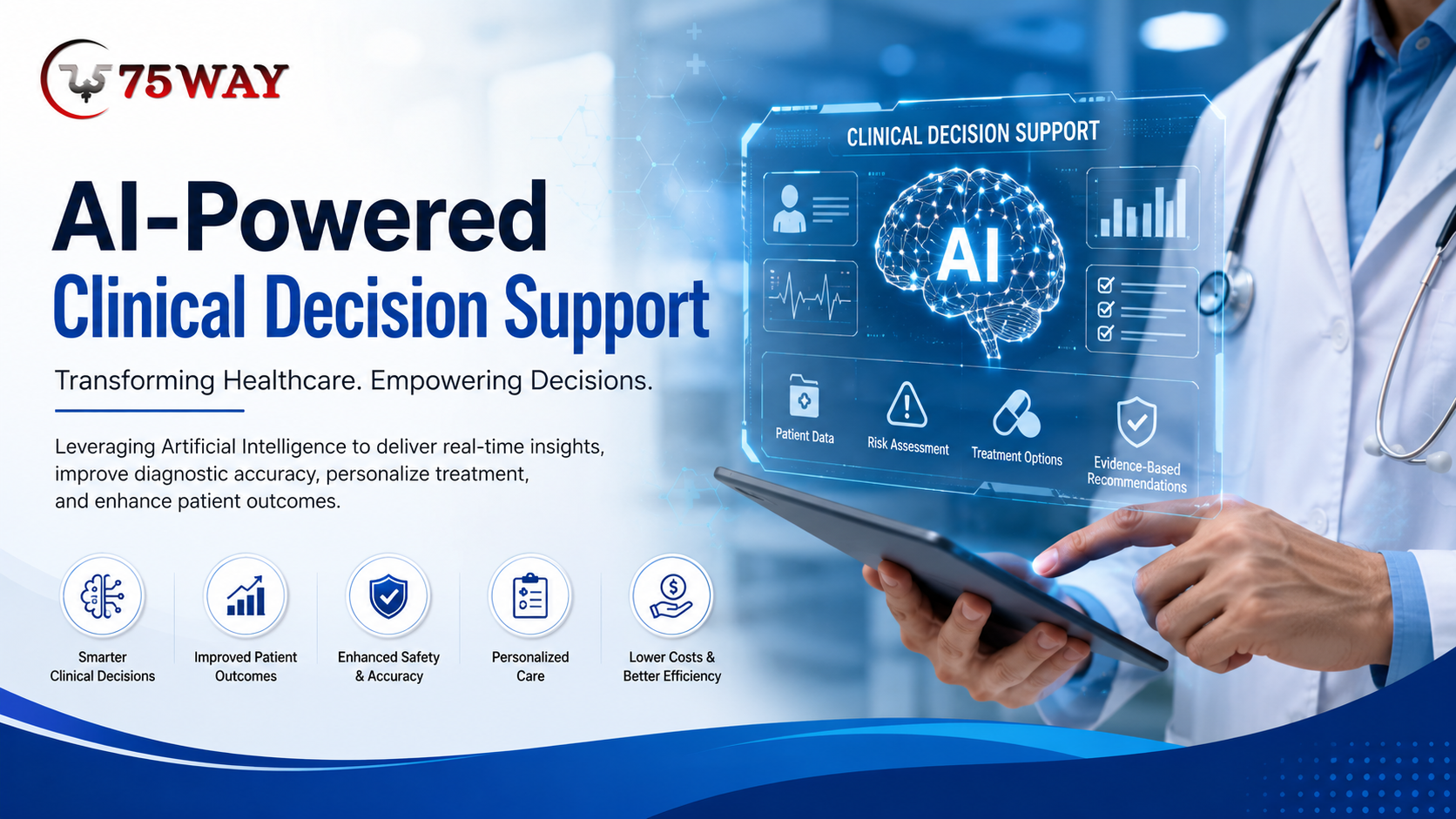
The healthcare industry is undergoing a remarkable transformation fueled by artificial intelligence. As medical organizations face increasing pressure to improve patient outcomes, reduce operational costs, and enhance care quality, advanced technologies are becoming essential components of modern healthcare systems. Among the most impactful innovations is AI-powered clinical decision support, a technology that empowers healthcare professionals with data-driven insights to make faster and more accurate decisions.
Healthcare providers generate enormous volumes of patient data every day, including electronic health records, diagnostic images, laboratory reports, treatment histories, and clinical notes. Processing this information manually can be time-consuming and prone to human error. Artificial intelligence addresses this challenge by analyzing vast datasets in real time, helping clinicians identify patterns, predict risks, and recommend evidence-based treatments.
As hospitals, clinics, and healthcare organizations continue embracing digital transformation, intelligent healthcare technologies are becoming critical tools for improving patient care and operational efficiency. This article explores the growing role of AI-driven decision support systems, their benefits, applications, challenges, and future potential in the healthcare sector.
Understanding AI-Powered Clinical Decision Support
Clinical decision support systems (CDSS) are software solutions designed to assist healthcare professionals in making informed clinical decisions. When enhanced with artificial intelligence, these systems become significantly more powerful by leveraging machine learning, natural language processing, predictive analytics, and data mining techniques.
AI-powered clinical decision support tools can:
- Analyze patient records instantly
- Detect potential health risks
- Recommend treatment options
- Identify medication interactions
- Support diagnostic accuracy
- Predict disease progression
- Improve patient safety
Rather than replacing healthcare professionals, these intelligent systems serve as valuable assistants that enhance clinical judgment through evidence-based recommendations.
The primary goal is to provide clinicians with actionable insights at the right time, enabling better patient outcomes while reducing unnecessary healthcare costs.
Why Healthcare Organizations Are Adopting Artificial Intelligence
Healthcare environments are becoming increasingly complex. Medical professionals must process large amounts of information while making critical decisions under time-sensitive conditions.
Traditional methods often struggle to keep pace with growing data volumes and evolving medical knowledge.
Modern AI for healthcare technologies helps address these challenges by:
- Accelerating diagnosis
- Improving treatment planning
- Enhancing workflow efficiency
- Reducing administrative burdens
- Supporting personalized medicine
- Improving population health management
Healthcare providers can leverage intelligent systems to deliver more accurate and efficient care while maintaining compliance with industry regulations and standards.
How AI-Powered Clinical Decision Support Works
Artificial intelligence enhances decision-making by combining advanced computational capabilities with medical expertise.
Data Collection and Integration
The system gathers information from multiple sources, including:
- Electronic health records
- Medical imaging systems
- Laboratory results
- Wearable devices
- Patient monitoring systems
- Clinical databases
This comprehensive data foundation enables more informed analysis.
Data Processing and Analysis
Machine learning algorithms evaluate patient information to identify trends, abnormalities, and risk factors.
These systems can recognize patterns that may not be immediately apparent to human clinicians.
Evidence-Based Recommendations
The platform compares patient data against extensive medical knowledge bases and clinical guidelines.
It then generates recommendations that align with established best practices.
Continuous Learning
Artificial intelligence continuously improves its performance by learning from new data, treatment outcomes, and healthcare research.
This allows the system to adapt to changing medical knowledge and evolving patient needs.
Key Benefits of Intelligent Clinical Decision Support Systems
Improved Diagnostic Accuracy
Accurate diagnosis is one of the most important aspects of healthcare delivery.
AI-enhanced systems can analyze symptoms, imaging results, laboratory data, and patient histories simultaneously, helping clinicians identify conditions more accurately.
This reduces diagnostic errors and supports earlier intervention.
Faster Clinical Decision-Making
Healthcare professionals often work under significant time constraints.
Intelligent support systems rapidly process information and provide recommendations within seconds, allowing clinicians to focus more on patient care.
Faster decision-making can be particularly valuable in emergency and critical care settings.
Enhanced Patient Safety
Medication errors, adverse drug interactions, and overlooked clinical indicators can negatively impact patient outcomes.
Advanced healthcare intelligence platforms can automatically flag:
- Dangerous medication combinations
- Allergy risks
- Treatment contraindications
- Abnormal test results
This proactive approach improves patient safety and reduces preventable complications.
Personalized Treatment Planning
Every patient has unique medical needs.
Artificial intelligence can evaluate genetic factors, lifestyle information, medical history, and clinical data to support individualized treatment strategies.
Personalized care plans often lead to better outcomes and higher patient satisfaction.
Reduced Healthcare Costs
Improved efficiency, fewer errors, and better resource allocation can significantly reduce healthcare expenditures.
Organizations implementing modern healthcare AI solutions often experience cost savings through:
- Reduced hospital readmissions
- Improved operational efficiency
- Earlier disease detection
- Better care coordination
Applications Across Healthcare Settings
Disease Diagnosis
AI systems assist physicians in identifying various medical conditions, including:
- Cancer
- Cardiovascular diseases
- Neurological disorders
- Respiratory illnesses
- Infectious diseases
By analyzing large datasets and diagnostic images, these tools can support earlier and more accurate diagnoses.
Medical Imaging Analysis
Radiology is one of the most widely adopted areas of healthcare AI.
Advanced image analysis algorithms can detect abnormalities in:
- X-rays
- CT scans
- MRI scans
- Ultrasounds
- Mammograms
These technologies help radiologists improve efficiency while maintaining high diagnostic accuracy.
Predictive Risk Assessment
Predictive analytics allows healthcare providers to identify patients at risk of developing serious conditions before symptoms become severe.
This enables preventive interventions that improve patient outcomes and reduce treatment costs.
Medication Management
Artificial intelligence supports safer prescribing practices by evaluating:
- Drug interactions
- Patient allergies
- Medical histories
- Dosage recommendations
This reduces medication-related complications and enhances treatment effectiveness.
Chronic Disease Management
Patients with chronic illnesses require continuous monitoring and personalized care.
Intelligent healthcare platforms help manage conditions such as:
- Diabetes
- Hypertension
- Heart disease
- Asthma
- Chronic kidney disease
By analyzing patient data over time, these systems support proactive disease management strategies.
The Role of AI in Healthcare Digital Transformation
Healthcare organizations are increasingly investing in digital transformation initiatives to improve service delivery and patient experiences.
Modern AI solutions in healthcare play a critical role in these efforts by enabling:
Intelligent Automation
Administrative tasks such as scheduling, billing, documentation, and claims processing can be automated, reducing staff workload.
Remote Patient Monitoring
Wearable devices and connected health platforms continuously collect patient data, allowing clinicians to monitor health conditions remotely.
Virtual Health Assistants
AI-powered chatbots and virtual assistants provide patients with information, appointment scheduling, symptom assessments, and medication reminders.
Population Health Management
Healthcare providers can analyze large populations to identify health trends, allocate resources effectively, and improve preventive care programs.
These capabilities contribute to more efficient and patient-centered healthcare systems.
Challenges of Implementing AI in Healthcare
While artificial intelligence offers significant benefits, healthcare organizations must address several implementation challenges.
Data Privacy and Security
Healthcare data is highly sensitive.
Organizations must ensure compliance with data protection regulations while maintaining robust cybersecurity measures.
Integration with Existing Systems
Many healthcare facilities rely on legacy technologies that may not easily integrate with modern AI platforms.
Successful implementation requires careful planning and system compatibility assessments.
Algorithm Transparency
Healthcare professionals must understand how AI recommendations are generated.
Transparent and explainable models help build trust among clinicians and patients.
Workforce Training
Healthcare staff require proper training to effectively utilize intelligent decision support systems.
Education and change management initiatives are essential for successful adoption.
Future Trends in AI-Powered Healthcare Solutions
Artificial intelligence continues to evolve rapidly, creating new opportunities for healthcare innovation.
Several emerging trends are expected to shape the future of intelligent healthcare systems.
Precision Medicine
Advanced analytics will enable highly personalized treatment approaches based on individual genetic profiles and health characteristics.
Real-Time Clinical Intelligence
Future systems will provide continuous monitoring and instant recommendations during patient care activities.
Generative AI in Healthcare
Generative AI technologies will assist with clinical documentation, patient communication, medical research, and knowledge management.
Enhanced Predictive Analytics
More sophisticated predictive models will improve disease prevention and population health strategies.
Integrated Care Ecosystems
Healthcare organizations will increasingly connect hospitals, clinics, pharmacies, insurers, and patients through intelligent digital platforms.
These innovations will further enhance healthcare quality, accessibility, and efficiency.
Why Businesses Partner with AI Development Experts
Implementing enterprise-grade healthcare intelligence solutions requires expertise in artificial intelligence, machine learning, healthcare compliance, cloud infrastructure, and software engineering.
Organizations seeking scalable and secure AI implementations often collaborate with experienced technology partners.
75way Technologies specializes in developing innovative AI-driven solutions tailored to healthcare industry requirements. From intelligent analytics platforms and predictive healthcare systems to advanced clinical support applications, the company helps healthcare providers leverage emerging technologies to improve patient outcomes and operational performance.
By partnering with experienced AI development teams, healthcare organizations can accelerate innovation while ensuring regulatory compliance, security, and long-term scalability.
Conclusion
The adoption of AI-powered clinical decision support is transforming healthcare delivery worldwide. By helping clinicians analyze complex medical information, improve diagnostic accuracy, personalize treatment plans, and enhance patient safety, intelligent decision support systems are becoming indispensable tools in modern medicine.
As healthcare data continues to grow and patient expectations evolve, organizations that embrace advanced digital technologies will be better positioned to deliver high-quality, efficient, and patient-centered care.
The future of healthcare lies in combining human expertise with intelligent technologies. Through strategic implementation of advanced AI solutions for healthcare, providers can unlock new opportunities for innovation, improve clinical outcomes, and build more resilient healthcare systems for the years ahead.
Frequently Asked Questions (FAQs)
1. What is AI-powered clinical decision support?
AI-powered clinical decision support is a healthcare technology that uses artificial intelligence to analyze patient data and provide evidence-based recommendations that assist healthcare professionals in making informed clinical decisions.
2. How does AI improve diagnostic accuracy?
Artificial intelligence can analyze large volumes of patient data, medical images, laboratory results, and clinical records to identify patterns and abnormalities that support more accurate diagnoses.
3. Can AI replace healthcare professionals?
No. AI is designed to assist healthcare providers, not replace them. It enhances clinical decision-making by providing data-driven insights while healthcare professionals retain ultimate responsibility for patient care.
4. What are the main benefits of healthcare AI solutions?
Key benefits include improved diagnosis, enhanced patient safety, personalized treatment planning, operational efficiency, predictive analytics, and reduced healthcare costs.
5. Is artificial intelligence safe for healthcare applications?
When implemented properly with strong security measures, regulatory compliance, and clinical oversight, AI technologies can be highly safe and effective for healthcare environments.

 Arabic
 French
 Spanish
 Portuguese
 Deutsch
 Turkish
 Dutch
Dutch
 Italiano
 Russian
 Romaian
 Portuguese (Brazil)
 Greek
Greek