


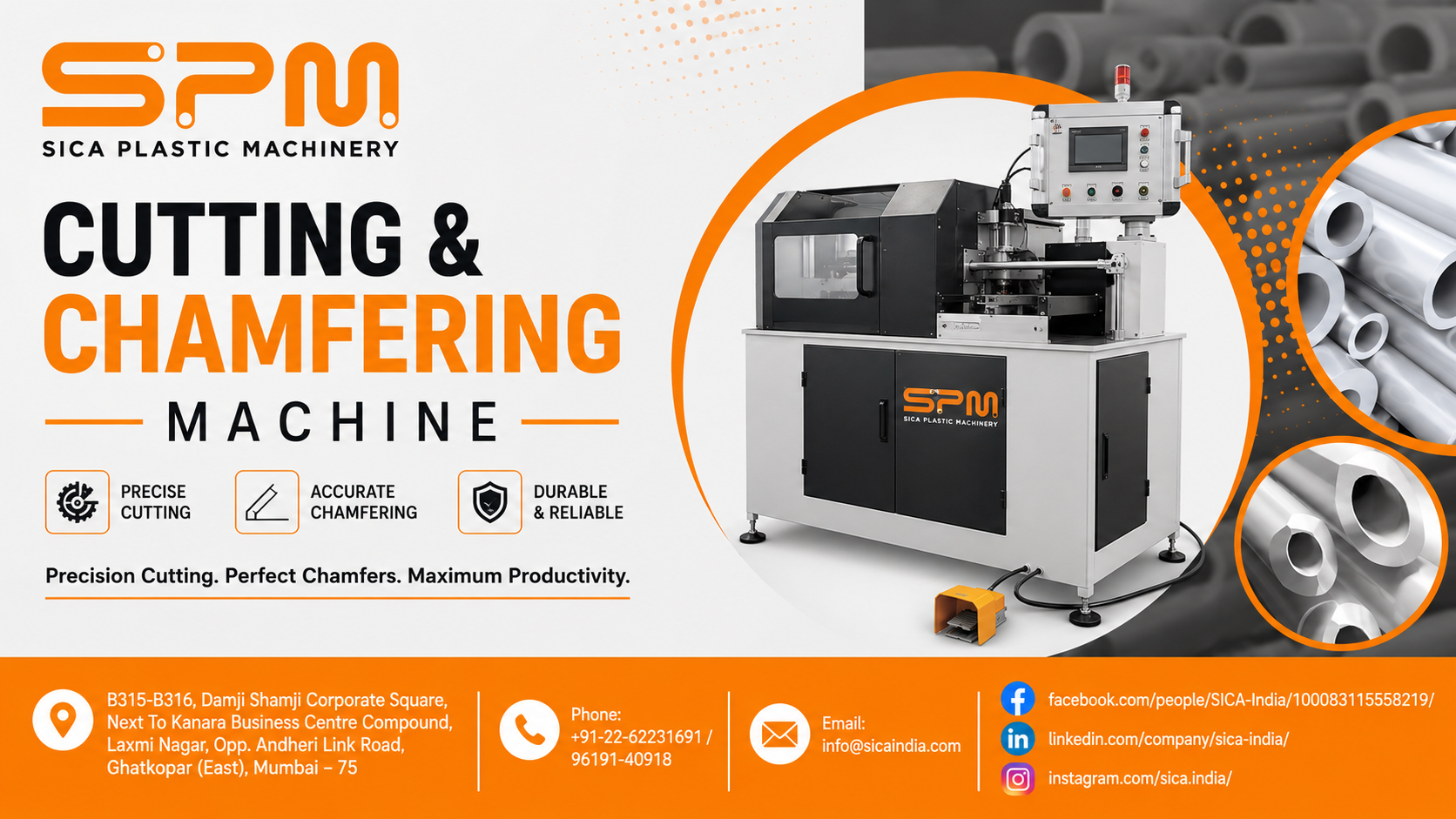
In the precision-driven world of metal fabrication and industrial manufacturing, the demand for speed and accuracy is unrelenting. Among the various processes required to prepare raw materials for assembly, two of the most critical are cutting and chamfering machine to length and edge finishing. Historically, these were separate operations performed on different machines, requiring multiple handling of the workpiece. However, the advent of the cutting and chamfering machine has revolutionized this workflow. By integrating two essential processes into a single platform, these machines have become a cornerstone of modern production lines, significantly enhancing throughput and ensuring consistent quality.
Understanding the Machine’s Functionality
A cutting and chamfering machine is designed to perform two distinct tasks sequentially or simultaneously: severing a long tube, bar, or pipe to a specific length and removing the sharp edges from the cut ends. This second process, known as chamfering or beveling, involves cutting a slope at the edge of the tube's end. This is not merely an aesthetic choice; it is a functional requirement for many engineering applications.
The integration of these functions eliminates the need to transport material from a saw station to a deburring or chamfering station. In a typical setup, the material is loaded onto the infeed conveyor, clamped securely, and cut by a high-speed saw blade or cold saw. Immediately after the cutting cycle completes, the chamfering unit—often equipped with multiple high-speed spindles—moves into position. It machines the internal and external edges of the tube to the desired angle, creating a smooth, beveled finish ready for the next stage of production.
The Critical Importance of Chamfering
While cutting determines the dimension of the component, chamfering determines its usability in an assembly. Sharp edges left by a cutting process are hazardous to handle and can compromise the integrity of a final product.
Welding Preparation: In piping systems, a beveled edge is essential for creating a strong weld. It allows for proper penetration of the weld material, ensuring the joint is as strong as the pipe itself.
Ease of Assembly: In hydraulic cylinder manufacturing or furniture production, chamfered ends allow rods or tubes to slide easily into fittings or collars without snagging.
Safety: Removing burrs and sharp edges protects workers from cuts and injuries during subsequent handling processes.
Technological Features and Capabilities
Modern cutting and chamfering machines are marvels of engineering automation. They are far removed from the manual lathes and basic saws of the past. Today’s units often feature Computer Numerical Control (CNC) systems that allow operators to program complex cutting lengths and chamfer angles with the touch of a button.
Automatic Loading: Many machines are equipped with magazine loaders or bundle loaders that feed raw material into the machine automatically, allowing for unattended operation.
Servo-Driven Axes: The use of servo motors ensures precise positioning of the material for cutting and exact depth control during the chamfering process.
Quick-Change Tooling: To accommodate different tube diameters and shapes, modern machines utilize quick-change clamping systems and tool holders, reducing setup times significantly.
Self-Centering Clamps: These ensure that the tube is perfectly centered during both cutting and chamfering, which is vital for achieving concentric chamfering on oval or asymmetrical tubes.
Key Advantages for Manufacturers
The decision to invest in a combined cutting and chamfering machine is driven by tangible returns on investment. The move from multi-step processing to a single-step solution offers several compelling benefits.
Reduced Cycle Times: Since the workpiece does not need to be unloaded and moved to a separate machine for deburring, the total time to produce a finished part is drastically reduced.
Lower Labor Costs: Automation reduces the need for manual intervention. A single operator can often oversee the operation of multiple machines.
Consistent Quality: Automated chamfering ensures that every single tube has the exact same bevel angle and surface finish, eliminating the variability associated with manual grinding.
Minimized Material Handling: Less movement of the material means fewer chances for surface scratches or dents, preserving the quality of the final product.
Applications Across Industries
The versatility of these machines makes them indispensable across a vast array of sectors.
Automotive Industry: Used for manufacturing steering columns, shock absorber rods, and seat frame components where precision is critical for safety.
Hydraulics and Pneumatics: Cylinder tubes and piston rods must be perfectly chamfered to prevent seal damage during assembly.
Construction and Furniture: For structural steel tubes and furniture frames, these machines ensure clean cuts and safe edges for welding and assembly.
Oil and Gas: In the production of pipelines, chamfering is a mandatory step to prepare pipes for high-quality welding.
Considerations for Selection
Selecting the right cutting and chamfering machine requires a careful analysis of production needs. Manufacturers must consider the type of material (stainless steel, carbon steel, aluminum), the wall thickness of the tubes, and the required production volume. Furthermore, the complexity of the chamfer—whether it is a simple 45-degree angle or a complex J-bevel—will dictate the sophistication of the tooling required.
Conclusion
The cutting and chamfering machine represents a significant leap forward in manufacturing efficiency. By consolidating two critical operations into a unified, automated process, manufacturers can achieve higher productivity, superior cutting and chamfering machine product quality, and a safer working environment. As industries continue to push for faster turnaround times and tighter tolerances, the role of these dual-function machines will only grow in importance, solidifying their status as essential assets in the metal fabrication landscape.
Follow Us More Social Media Links:-
Follow Us On Facebook:- https://www.facebook.com/people/SICA-India/100083115558219/
Follow Us On Instagram:- https://www.instagram.com/sica.india/
Follow Us On Linkedin:- https://www.linkedin.com/company/sica-india/
Add:- B315-B316, Damji Shamji Corporate Square, Next To Kanara Business Centre Compound, Laxmi Nagar, Opp. Andheri Link Road, Ghatkopar (East), Mumbai &ndash 75
Call Us:- +91-22-62231691 / 96191-40918
Email Us:- info@sicaindia.com

 English
 Arabic
 French
 Spanish
 Portuguese
 Deutsch
 Turkish
 Italiano
 Russian
 Romaian
 Portuguese (Brazil)
 Greek
Greek