


Introduction
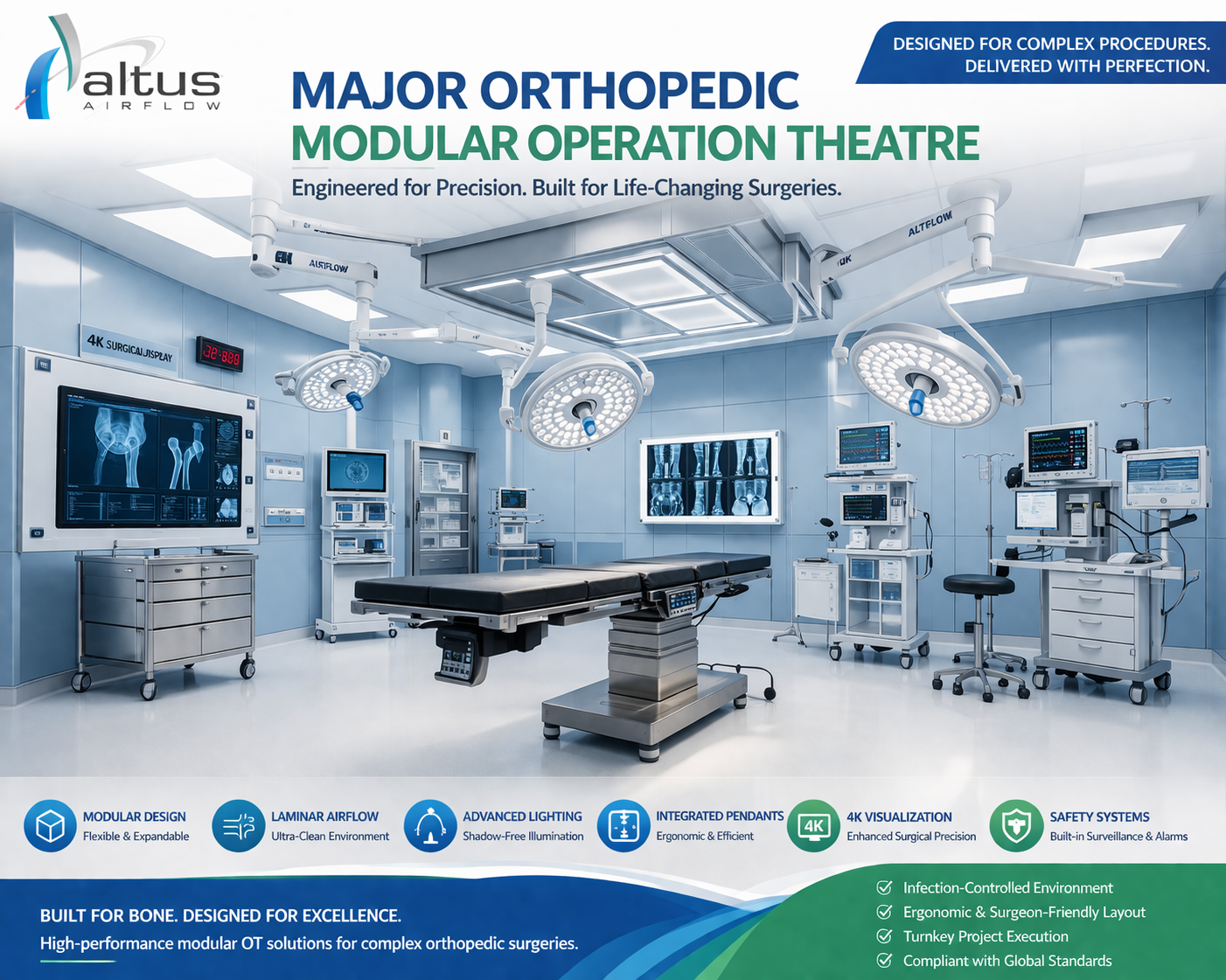
A Major Orthopedic Modular Operation Theatre is a highly advanced surgical facility designed for complex orthopedic procedures such as joint replacement surgeries, spine surgeries, trauma surgeries, fracture fixation, and ligament reconstruction procedures. These operation theatres are built using modern modular construction systems and advanced healthcare engineering technologies to maintain sterile and contamination-controlled surgical environments.
Hospitals and healthcare institutions planning to establish a modular orthopedic OT often want to understand the installation timeline before starting the project. The total installation duration depends on factors such as OT size, infrastructure readiness, HVAC complexity, customization level, cleanroom requirements, and equipment integration.
In most cases, a Major Orthopedic Modular Operation Theatre takes approximately 4 to 12 weeks for complete installation and commissioning.
What Is a Major Orthopedic Modular Operation Theatre?
A Major Orthopedic Modular Operation Theatre is a specially engineered operation theatre developed for advanced orthopedic surgeries using modular cleanroom systems and healthcare infrastructure technologies.
These operation theatres generally include:
- Modular wall and ceiling panels
- HVAC systems
- Laminar airflow systems
- HEPA filtration systems
- Medical gas pipeline systems
- Specialized flooring
- Surgical lighting systems
- Automation controls
- Hermetically sealed doors
These systems work together to maintain sterile and efficient surgical conditions.
Average Installation Timeline
The installation timeline generally ranges between:
- 4 to 6 weeks for standard orthopedic OT projects
- 8 to 12 weeks for large or highly customized projects
The duration depends on:
- OT size
- Number of operation theatres
- HVAC system complexity
- Cleanroom specifications
- Infrastructure readiness
- Equipment integration
- Project customization
Stages of Orthopedic Modular OT Installation
Site Inspection and Consultation (3–7 Days)
The installation process starts with:
- Site inspection
- Infrastructure assessment
- Utility planning
- Workflow analysis
- Space optimization
The engineering team evaluates:
- Structural readiness
- Electrical systems
- Air handling requirements
- Medical gas requirements
- OT layout possibilities
Proper planning helps reduce delays during installation.
OT Planning and Engineering Design (5–10 Days)
Customized OT layouts and engineering drawings are prepared according to:
- Orthopedic surgical workflow
- NABH guidelines
- Cleanroom standards
- Hospital requirements
This stage includes:
- HVAC design
- Airflow calculations
- Electrical planning
- Equipment positioning
- OT layout planning
Manufacturing and Material Procurement (1–3 Weeks)
After design approval, modular systems and OT materials are manufactured.
This includes:
- Modular wall panels
- Ceiling systems
- Doors and windows
- HVAC equipment
- Laminar airflow units
- HEPA filters
- Electrical panels
Manufacturing time depends on customization and material availability.
Civil Preparation Work (3–7 Days)
Basic civil preparation may be required before installation.
This can include:
- Flooring preparation
- Utility line preparation
- Drainage modifications
- Structural adjustments
Well-prepared infrastructure helps speed up installation.
Modular Structure Installation (1–2 Weeks)
The installation team assembles:
- Modular wall systems
- Ceiling systems
- Hermetically sealed doors
- Flush-view windows
Since modular systems are prefabricated, installation is much faster than conventional construction.
HVAC and Laminar Airflow Installation (5–10 Days)
Advanced HVAC systems and laminar airflow units are installed to maintain:
- Controlled temperature
- Controlled humidity
- Positive pressure
- Sterile airflow circulation
This stage is critical for maintaining orthopedic OT cleanroom standards.
HEPA Filtration and Cleanroom Integration (2–5 Days)
HEPA filtration systems are integrated and calibrated to achieve cleanroom performance.
These systems help:
- Reduce airborne contamination
- Improve air quality
- Maintain sterile conditions
Medical Gas Pipeline Installation (2–5 Days)
Medical gas systems are installed for:
- Oxygen supply
- Vacuum systems
- Compressed air systems
These systems support anesthesia and surgical procedures.
Electrical and Automation Integration (3–7 Days)
Medical-grade electrical systems are integrated including:
- OT control panels
- Surgical lighting systems
- Backup power systems
- Automation controls
- Environmental monitoring systems
Automation systems monitor:
- Temperature
- Humidity
- Pressure differentials
- Air quality
Surgical Equipment Installation (2–5 Days)
The OT is equipped with:
- Orthopedic operation tables
- Surgical lights
- Imaging systems
- Pendants
- Monitoring systems
Proper equipment integration improves surgical workflow efficiency.
Testing and Validation (3–7 Days)
Before handover, the OT undergoes:
- Airflow validation
- HEPA filter testing
- Pressure differential testing
- Electrical safety testing
- Cleanroom validation
These tests ensure compliance with healthcare engineering standards.
Final Commissioning and Handover (1–2 Days)
After successful testing, the OT is handed over as a fully operational surgical facility.
Factors Affecting Installation Time
Project Size
Larger hospitals with multiple operation theatres require more installation time.
Customization Requirements
Advanced customization increases manufacturing and engineering duration.
HVAC Complexity
Complex airflow systems and larger AHU capacities may extend installation timelines.
Equipment Availability
Delays in surgical equipment procurement can slow project completion.
Civil Infrastructure Readiness
Incomplete infrastructure may delay installation work.
Regulatory Approvals
Approval delays can affect the overall project schedule.
Benefits of Faster Modular Installation
Reduced Hospital Downtime
Quick installation helps hospitals start operations sooner.
Faster Surgical Readiness
Hospitals can begin orthopedic procedures earlier.
Better Project Coordination
Prefabricated systems improve installation efficiency and reduce delays.
Improved Quality Control
Factory-manufactured modular systems provide consistent quality.
Importance of Proper Installation
Orthopedic surgeries often involve:
- Artificial implants
- Open bone exposure
- Long surgical durations
- High contamination risks
Improper OT installation may increase infection risks and affect surgical outcomes.
Professional installation ensures:
- Proper airflow management
- Stable environmental conditions
- Sterile operation environments
- Long-term infrastructure reliability
Applications
Major orthopedic modular OTs are commonly used in:
- Orthopedic hospitals
- Trauma centers
- Joint replacement centers
- Multi-specialty hospitals
- Sports injury treatment facilities
Future Trends in Orthopedic OT Installation
Modern orthopedic operation theatres are evolving with:
- Smart OT automation
- AI-based environmental monitoring
- Robotic surgery integration
- Digital OT management systems
- Energy-efficient HVAC systems
These technologies improve operational efficiency and surgical precision.
Conclusion
The installation of a Major Orthopedic Modular Operation Theatre generally takes between 4 and 12 weeks depending on project size, cleanroom complexity, infrastructure readiness, HVAC systems, and customization requirements. The installation process includes OT planning, modular construction, HVAC integration, laminar airflow systems, HEPA filtration, medical gas systems, electrical integration, equipment installation, testing, and commissioning. Proper installation helps maintain sterile surgical conditions, improve infection control, enhance workflow efficiency, and ensure long-term operational reliability in orthopedic healthcare facilities.
Frequently Asked Questions (FAQs)
1. How long does it take to install a Major Orthopedic Modular Operation Theatre?
A Major Orthopedic Modular Operation Theatre usually takes 4 to 12 weeks to install depending on project complexity and customization.
2. What factors affect installation time?
Project size, HVAC complexity, infrastructure readiness, customization requirements, and equipment availability affect installation timelines.
3. Why are modular orthopedic OTs installed faster than conventional OTs?
Prefabricated modular systems reduce construction time and simplify installation.
4. What systems are installed in orthopedic modular OTs?
These OTs include HVAC systems, HEPA filtration, laminar airflow, modular wall panels, medical gas systems, and automation controls.
5. Where are modular orthopedic OTs commonly used?
They are commonly used in orthopedic hospitals, trauma centers, joint replacement centers, and multi-specialty hospitals.
Read Our Previous Blog ---------------> Which procedures are performed in a Modular Major Orthopedic Operation Theatre?

 Arabic
 French
 Spanish
 Portuguese
 Deutsch
 Turkish
 Dutch
Dutch
 Italiano
 Russian
 Romaian
 Portuguese (Brazil)
 Greek
Greek