


The global demand for reliable piping systems in construction, plumbing, heating, and industrial infrastructure has led to the development of strict technical standards. One of the most recognized specifications in this field is EN 10255, a European standard that defines requirements for non-alloy steel tubes suitable for welding and threading. This standard is widely used in water supply systems, gas distribution networks, mechanical applications, and engineering structures where strength, durability, and safety are essential.
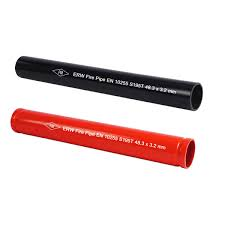
Understanding EN 10255 is important for engineers, contractors, and procurement specialists who work with steel tube systems. It ensures that materials meet consistent mechanical properties, dimensional accuracy, and performance expectations across different industrial environments. With increasing global infrastructure development, this standard has become a key reference in selecting high-quality steel tubing solutions.
EN 10255 Standard Structure and Technical Specifications
The EN 10255 standard applies specifically to non-alloy steel tubes intended for welding and threading, making it suitable for a wide range of low and medium-pressure applications. These steel tubes are manufactured in different series, typically categorized by light, medium, and heavy wall thickness, depending on the pressure and structural requirements of the project.
One of the most important aspects of this standard is its focus on dimensional accuracy and mechanical strength. Steel tubes produced under EN 10255 must comply with strict tolerances in terms of outer diameter, wall thickness, and straightness. This ensures that the tubes can be easily connected using standard fittings, threading systems, or welding techniques without compatibility issues.
The standard also defines mechanical properties such as tensile strength, yield strength, and elongation. These properties ensure that the steel tubes can withstand internal pressure, external loads, and environmental stress without deformation or failure. This makes them suitable for applications in heating systems, water pipelines, compressed air lines, and fire protection systems.
Another key element of EN 10255 is surface condition and coating requirements. Steel tubes may be supplied in black finish or galvanized form. Galvanized steel tubes are coated with zinc to improve corrosion resistance, making them ideal for outdoor installations and humid environments. This protective layer significantly extends the service life of piping systems, especially in industrial and marine conditions.
EN 10255 Applications in Construction and Industrial Systems
The practical applications of EN 10255 steel tubes are extensive, covering both residential and industrial sectors. In building construction, these tubes are commonly used in plumbing systems for water distribution. Their ability to handle moderate pressure and temperature variations makes them suitable for both hot and cold water supply lines.
In heating systems, EN 10255 steel tubes are widely used in radiator connections, central heating installations, and boiler systems. Their durability and heat resistance ensure consistent performance even under continuous thermal stress. This makes them a preferred choice for commercial buildings, hospitals, and industrial facilities where heating reliability is critical.
Gas distribution systems also rely heavily on EN 10255 steel tubes. The standard ensures that the tubes can be safely threaded and sealed, reducing the risk of leakage in natural gas and LPG pipelines. Safety is a major concern in gas applications, and compliance with this standard helps maintain system integrity over long periods of use.
In industrial environments, these steel tubes are used in compressed air systems, mechanical engineering frameworks, and fire protection networks. Their strength and adaptability allow them to function efficiently in demanding conditions where pressure stability and mechanical resistance are essential.
Another important application is in infrastructure development projects such as water treatment plants, irrigation systems, and energy facilities. The reliability of EN 10255 tubes ensures uninterrupted fluid transportation, which is vital for large-scale operations. As urbanization continues to expand globally, the demand for standardized steel tubing solutions continues to grow.
EN 10255 Material Grades and Manufacturing Quality Factors
The quality of EN 10255 steel tubes depends largely on the raw materials used and the manufacturing processes involved. These tubes are typically produced from non-alloy steel grades that provide a balance between strength, ductility, and weldability. The chemical composition is carefully controlled to ensure consistent performance across different batches.
Manufacturing methods play a significant role in determining the final quality of the steel tubes. Hot forming and cold finishing techniques are commonly used to achieve the required dimensional accuracy and surface smoothness. Welded steel tubes under this standard are produced using advanced welding processes that ensure uniform seam strength and structural integrity.
Quality assurance is a critical part of production. Manufacturers conduct hydrostatic pressure tests, non-destructive testing, and dimensional inspections to verify compliance with EN 10255 requirements. These tests ensure that every tube meets safety and performance standards before being released into the market.
Corrosion resistance is another important factor. While black steel tubes are commonly used in indoor applications, galvanized versions offer enhanced protection against rust and environmental damage. This makes them suitable for outdoor installations and long-term infrastructure projects where maintenance access is limited.
Dimensional consistency is also essential for compatibility with fittings and connectors. EN 10255 tubes are designed to work seamlessly with standardized threading systems, reducing installation time and improving system reliability. This compatibility is one of the reasons why the standard is widely adopted across Europe and many other regions worldwide.
Conclusion Importance of EN 10255 in Modern Engineering Systems
The en 10255 standard plays a vital role in ensuring the safety, reliability, and efficiency of steel tube systems used in construction, plumbing, heating, and industrial applications. By defining strict requirements for material quality, mechanical strength, and dimensional accuracy, it provides a dependable framework for manufacturers and engineers alike.
As global infrastructure continues to expand, the need for standardized and high-performance piping systems becomes increasingly important. EN 10255 steel tubes offer a trusted solution that meets these demands while maintaining long-term durability and operational safety.

 English
 Arabic
 French
 Spanish
 Portuguese
 Deutsch
 Turkish
 Dutch
Dutch
 Russian
 Romaian
 Portuguese (Brazil)
 Greek
Greek