


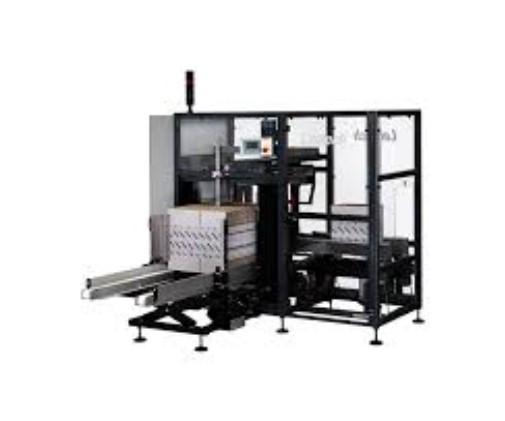
As a critical piece of end-of-line packaging equipment, the Lantech case erector forms flat corrugated blanks into erected, bottom-sealed boxes ready for product loading in high-volume production environments. In operations where case forming is a bottleneck, the speed and reliability of this part machine directly determine whether downstream filling, sealing, and palletising operations run at full capacity or suffer the cascading downtime effects that an unreliable case erector creates across an integrated packaging line.
How the Case Erector Works
The Lantech case erector processes flat corrugated blanks through a sequence of mechanical operations that transform them into usable cases within seconds. Blank magazine storage feeds individual blanks to the erection mechanism. Suction cup systems pick and open the blank. Folding ploughs and guide rails position the flaps correctly. Hot melt adhesive or tape is applied to the bottom flaps. The completed, bottom-sealed case is discharged to the packing station conveyor ready for immediate product loading. Each of these steps involves components that wear predictably and require maintenance attention on appropriate schedules.
Suction Cup and Blank Feed System
The blank feed and suction cup system is one of the most mechanically active areas of the Lantech case erector and one of the most common sources of performance problems when components wear or lose their specification condition. Suction cups wear and lose the sealing ability required to pick blanks reliably. Vacuum pump performance degrades as system components age. Blank magazine guide adjustments that drift over time cause misfeeds that interrupt production. Regular inspection and adjustment of this system, combined with scheduled suction cup replacement, prevents the intermittent misfeed problems that reduce throughput without constituting full machine stoppages.
Hot Melt Adhesive System
Case bottom sealing performance depends on the hot melt adhesive system delivering the correct quantity of adhesive at the correct temperature to each application point on the bottom flaps. Nozzle wear or plugging causes adhesive pattern changes that reduce seal strength. Temperature control system calibration affects adhesive viscosity and flow rate. Hose and pump components that degrade over time deliver inconsistent adhesive volumes. Maintaining the adhesive system within its designed operating parameters is fundamental to case seal integrity across the full throughput range the machine is capable of achieving.
Folding and Guiding Components
The mechanical folding and guiding components that position corrugated flaps during the erection cycle experience continuous contact with cardboard and adhesive that causes wear and buildup accumulation over operating hours. Worn guide surfaces create inconsistent flap fold geometry. Adhesive buildup on guides and folding elements causes the sticking and dragging that disrupts erection cycle timing. Regular cleaning and wear surface inspection identifies degradation before it reaches the point where it affects case quality or causes machine stoppages during production.
Maintenance Scheduling
Developing an effective maintenance schedule for the Lantech case erector requires understanding the specific wear rates of each component system in the context of actual production volume and blank type. Operations running high volumes of corrugated blanks at the stiffer end of the specification range put more mechanical stress on erection components than operations running lighter-weight blanks at lower throughput rates. Adjusting maintenance intervals to reflect actual operating conditions rather than applying calendar-based schedules produces more reliable performance with better parts utilisation.
Performance Optimisation
Beyond maintenance, performance optimisation of the Lantech case erector involves systematic adjustment of the machine's operating parameters to achieve maximum reliable throughput without creating the reliability problems that come from operating at parameters beyond the machine's consistent capability. Blank magazine capacity, adhesive temperature profiles, erection cycle speed, and discharge timing all interact in ways that experienced machine technicians understand through accumulated knowledge of how these parameters affect each other and the quality of the erected cases produced.
Sourcing Replacement Components
Sourcing replacement components for this type of end-of-line equipment requires accurate machine identification and access to a specialist distributor with deep knowledge of Lantech case erector configurations across different model variants produced over the company's product history. Older machines may require components no longer in standard distribution, making a specialist with broader sourcing capability more valuable than a general distributor whose stock is limited to current active production parts.
For maintenance professionals who need to source part machine components for Lantech case erectors and related end-of-line packaging equipment, working with a specialist distributor who understands Lantech machine configurations across multiple generations ensures correct component identification and reliable availability for both current and legacy machine models.

 English
 Arabic
 French
 Spanish
 Portuguese
 Turkish
 Dutch
Dutch
 Italiano
 Russian
 Romaian
 Portuguese (Brazil)
 Greek
Greek