



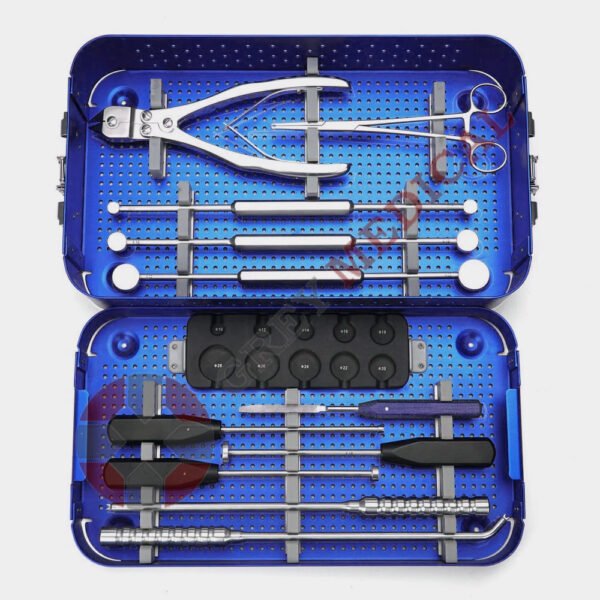
Spinal surgery demands an extraordinary level of precision. When working near the spinal cord and complex nerve roots, a fraction of a millimeter determines the success of a procedure. Surgeons rely entirely on their expertise and the reliability of the tools in their hands. The right surgical instruments ensure safety, enhance surgical efficiency, and improve patient outcomes.
The Demand for Precision in Spinal Procedures
Operating on the spine involves navigating incredibly dense bone and delicate neural structures. Surgeons perform tasks like decompressing nerves, fusing vertebrae, and stabilizing the spinal column. To do this safely, they need instruments that provide exceptional tactile feedback and structural integrity. When a tool performs exactly as expected, the surgical team can focus entirely on the patient. High-quality instruments reduce fatigue during long operations and minimize the risk of tissue damage. This makes the selection of basic spinal tools a critical component of medical training and hospital procurement.
Essential Spinal Surgery Instruments
While complex spinal surgeries often require specialized basic surgery instruments technology, a core set of manual instruments forms the foundation of almost every procedure. Here are the basic surgical instruments for the spine.
Rongeurs: Biting and Shaping Bone
Rongeurs are heavy-duty, gouge-forceps designed to bite off small pieces of bone or tough cartilage. They are indispensable for procedures like laminectomies, where surgeons must remove portions of the vertebral bone to relieve pressure on the spinal nerves.
- Kerrison Rongeurs: These are perhaps the most recognizable spinal rongeurs. They feature a unique sliding shaft and a cutting bite that allows surgeons to safely remove bone over the spinal cord.
- Pituitary Rongeurs: These feature a longer, more slender profile. Surgeons use them to remove herniated disc material or soft tissue from tight spaces.
- Leksell Rongeurs: Known for their strong, double-action mechanisms, these are ideal for heavier bone removal tasks.
Curettes: Scraping and Cleaning Tissue
Curettes feature a small, scoop-like tip at the end of a long handle. Surgeons use them to scrape away bone, cartilage, and soft tissue. In spinal fusions, curettes help prepare the bone surfaces by scraping away the smooth outer layer, which promotes better bone graft healing.
- Straight Curettes: Used for direct, forward scraping in easily accessible areas.
- Angled Curettes: Designed with specific bends to reach underneath bone ledges or into the spinal canal safely.
- Ring Curettes: These feature an open loop rather than a solid scoop, allowing for aggressive tissue removal while maintaining precise control.
Osteotomes: Cutting and Preparing Bone
Osteotomes are surgical chisels used to cut or prepare bone. Unlike standard chisels, osteotomes are beveled on both sides, allowing them to cut cleanly straight down into the bone.
- Straight Osteotomes: Commonly used to harvest bone grafts from the iliac crest or to make direct cuts into the vertebral structures.
- Curved Osteotomes: Allow surgeons to shape bone in areas where a straight line of sight is obstructed.
- Smith-Petersen Osteotomes: A specific style often used in complex spinal deformity corrections to safely break or alter the angle of the spine.
Pedicle Probes: Navigating Spinal Pathways
Pedicle screws provide absolute stability in spinal fusion surgeries. Before a surgeon can place these screws, they must create a safe pathway through the pedicle bone into the vertebral body. Pedicle probes are the specialized instruments used to create and navigate this path.
- Straight Probes: Used when the trajectory into the pedicle is direct and unobstructed.
- Curved Probes: Provide a tactile advantage. The curve helps the probe naturally follow the path of least resistance through the softer cancellous bone while avoiding the hard outer cortex near the nerves.
- Gearshift Probes: Feature a blunt tip that prevents accidental puncture of the anterior vertebral wall, keeping surrounding blood vessels safe.
The Importance of Quality and Durability
Spinal instruments face immense physical stress during operations. They must cut through dense bone without bending, chipping, or losing their edge. A compromised tool extends surgery time and introduces unnecessary risks. Premium surgical instruments undergo rigorous manufacturing processes. They utilize high-grade stainless steel to ensure they resist corrosion, survive repeated sterilization cycles, and maintain their structural integrity for years. For medical facilities, investing in durable tools is a matter of patient safety and long-term cost efficiency.
GreyMed’s Commitment to Surgical Excellence
GreyMed understands the heavy responsibility that surgeons carry into the operating room. That is why GreyMed commits to delivering surgical instrumentation that meets the highest standards of quality and durability. Every rongeur, curette, osteotome, and probe we produce undergoes strict quality control. We engineer our tools to provide superior tactile feedback, ergonomic comfort, and unwavering reliability. When you hold a GreyMed instrument, you feel the meticulous craftsmanship designed specifically for the demands of modern spinal surgery.
Equip Your Team with the Best
Success in spinal surgery starts with the right equipment. Understanding the basic surgical instruments for the spine is the first step toward building a highly effective surgical setup. Whether you are outfitting a new surgical center or upgrading your current trays, rely on tools engineered for perfection. We invite you to browse the complete GreyMed catalog to discover our premium spinal solutions. Equip your operating room with the precision, durability, and quality your patients deserve.

 Arabic
 French
 Spanish
 Portuguese
 Deutsch
 Turkish
 Dutch
Dutch
 Italiano
 Russian
 Romaian
 Portuguese (Brazil)
 Greek
Greek