


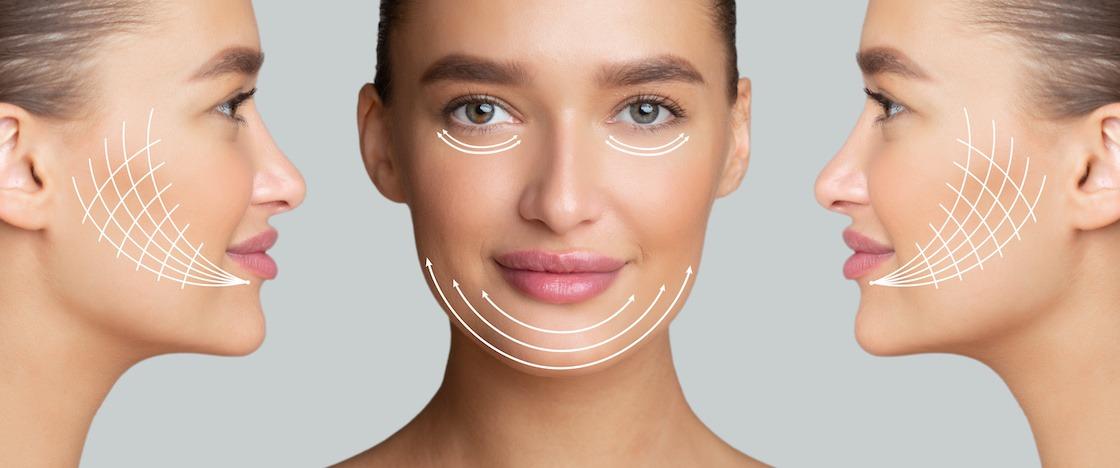
The Art of the Liquid Facelift: Strategic Placement for Natural Results
Facial rejuvenation has moved far beyond the simple goal of "filling a wrinkle." In the sophisticated aesthetic market of 2026, the focus has shifted toward architectural restoration and the preservation of natural movement. Achieving an elegant, undetectable result through a Liquid Facelift Riyadh requires a deep understanding of facial anatomy and the strategic application of "lifting vectors." Rather than adding bulk to the front of the face, modern practitioners use advanced injectables to reinforce the lateral structural points that have weakened over time. This approach respects the unique character of the individual while providing a global refresh that looks as good in motion as it does in a still photograph. In the high-stakes professional and social circles of the Saudi capital, the "Art of the Liquid Facelift" is defined by its ability to create a "snatched," youthful silhouette that leaves others wondering if you’ve simply mastered the art of perfect self-care.
The Science of Lifting Vectors
The hallmark of a masterfully executed liquid facelift is the use of "lifting vectors." In 2026, practitioners are moving away from treating the face as a flat canvas and instead viewing it as a complex, three-dimensional structure that responds to mechanical tension.
Instead of injecting filler directly into the nasolabial folds (smile lines), which can lead to a heavy or "monkey-like" appearance, surgeons focus on the lateral (outer) anchors of the face. By placing high-G' (structural) fillers at the zygomatic arch (cheekbone) and the pre-auricular area (in front of the ear), a subtle, upward pull is created. This mechanical lift naturally elevates the lower face, smoothing the jawline and lightening the folds around the mouth. This "outside-in" strategy ensures that the volume remains at the periphery of the face, where it provides support without distorting the central features.
Mid-Face Architecture: Restoring the Ogee Curve
A youthful face is characterized by the "Ogee curve"—a gentle S-shaped contour that transitions smoothly from the cheekbone to the mid-face. As we age, this curve flattens due to fat pad migration and bone resorption.
Strategic placement in a liquid facelift aims to restore this architectural curve with millimetric precision.
-
Deep Volumization: Placing structural fillers directly onto the bone restores the projection of the cheeks.
-
Transition Softening: Using a more flexible, cohesive filler in the sub-malar area ensures that there are no harsh "steps" or "ridges" between the newly lifted cheek and the rest of the face.
-
Light Reflection: By smoothing this transition, the practitioner ensures that light hits the high points of the face evenly, creating a natural glow that signifies vitality.
The "Negative Space" and Periorbital Harmony
The area around the eyes, or the periorbital region, is often the most difficult to master but provides the most significant impact on "natural" results. In 2026, the trend is toward "Periorbital Harmony," where the goal is to erase tiredness while maintaining the natural shape of the eye.
A strategic liquid facelift addresses the "negative space" created by hollowing in the temples and the tear troughs. Hollowing in the temples can make the brow look like it’s dropping, while deep tear troughs create persistent shadows. By using ultra-lightweight, hydrating fillers in these delicate areas, the practitioner "evens out" the surface. This allows the eye to sit in a smooth, light-reflective frame, making the gaze appear wider and more vibrant without the need for a surgical brow lift.
Lower Face Sculpting: The Mandibular Edge
A defined jawline is the ultimate marker of a high-definition profile. However, over-filling the jawline can lead to a "masculine" or "heavy" look if not done strategically. The art lies in sharpening the mandibular edge while maintaining a soft, youthful transition to the neck.
-
The Mandibular Angle: Placing filler at the angle of the jaw (below the ear) provides the "tension" needed to pull the skin of the jowls tight.
-
Chin Balancing: Often, a subtle enhancement of the chin is required to balance the profile and provide an anchor point for the new jawline.
-
Subtle Softening: In the lower face, practitioners often combine fillers with "Micro-Tox" to soften the platysma bands in the neck, which further reduces the "downward pull" on the facial features.
Multi-Layering: The "Hybrid" Advantage
In 2026, natural results are achieved through "multi-layering." This technique involves using different types of injectables at different depths within the same area.
For example, a practitioner might use a deep, bone-mimicking filler for structural lift, topped with a medium-density filler for soft-tissue contouring, and finished with a "skin booster" in the superficial dermis for hydration and texture. This layered approach ensures that the "lift" is integrated into the tissue rather than sitting on top of it. It also ensures that the face feels soft to the touch and moves naturally when the patient talks, laughs, or expresses emotion, which is the ultimate test of a successful liquid facelift.
Precision Mapping and the Role of Expertise
Achieving a natural result through strategic placement is as much a science as it is an art. Leading clinics in Riyadh utilize 3D imaging and AI-assisted "aging simulations" to map out the patient’s unique vectors of descent before the first injection.
This data-driven approach allows the practitioner to see exactly where the "structural gaps" are. However, the final "art" lies in the injector’s hand. Choosing the right product viscosity for each specific layer and knowing exactly when to stop are what separate a "good" result from a "masterful" one. In 2026, the most sought-after practitioners are those who prioritize "restoration over augmentation," ensuring that every patient leaves looking like a refreshed, authentic version of themselves.
Conclusion: The New Aesthetic Standard
The Art of the Liquid Facelift is found in the details that aren't obvious to the naked eye. It is about a strategic, architectural approach that works with the body’s anatomy rather than against it. By focusing on lifting vectors, lateral support, and multi-layered integration, this procedure provides a sophisticated path to rejuvenation. For the discerning individual in Riyadh, it offers a way to maintain a competitive and vibrant presence with a look that is eternally elegant, naturally balanced, and perfectly "you."

 English
 Arabic
 French
 Portuguese
 Deutsch
 Turkish
 Dutch
Dutch
 Italiano
 Russian
 Romaian
 Portuguese (Brazil)
 Greek
Greek