


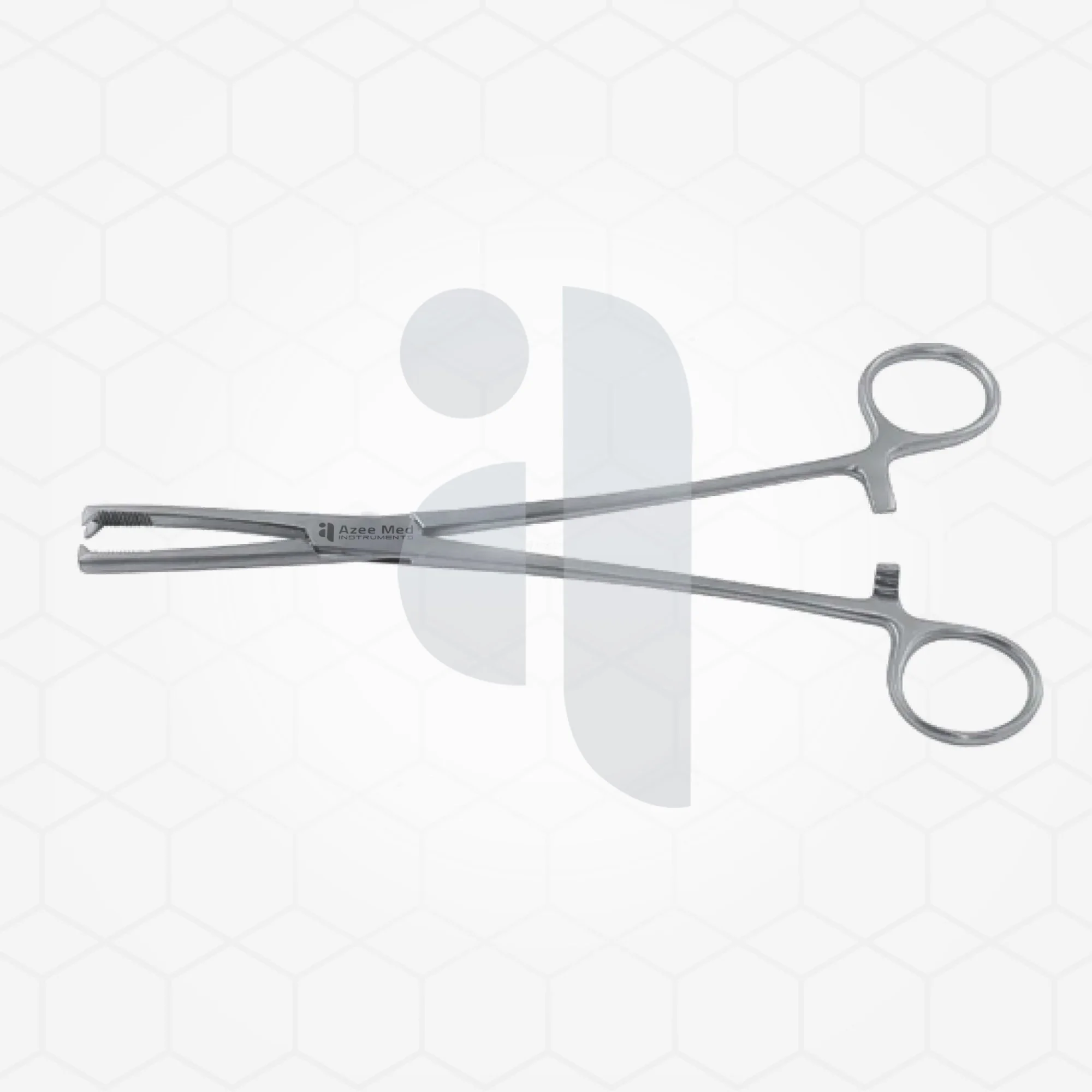
In the demanding world of surgical procedures, precision, control, and reliability are paramount. Surgeons and medical professionals depend on high-quality instruments to perform their duties effectively, ensuring patient safety and optimal outcomes. Among the essential tools in many gynecological and obstetric procedures is the tenaculum forceps, a specialized instrument designed for securely grasping and holding tissue, particularly the cervix. Azeemed Instruments is committed to providing superior surgical tools, and understanding the function and importance of these instruments is key to appreciating their role in healthcare.
The Design and Function of Tenaculum Forceps
The primary function of a tenaculum forceps is to stabilize the cervix, allowing the surgeon to perform procedures with greater accuracy and ease. The instrument typically features a pair of slender arms that terminate in sharp, single-toothed hooks or multi-toothed jaws. These hooks are designed to penetrate the tough, fibrous tissue of the cervix with minimal trauma, providing a firm grip that prevents slippage during a procedure. The handles often have a ratchet lock mechanism, which allows the surgeon to maintain a constant hold without continuous manual pressure. This design ensures that the uterus is held steady for procedures such as IUD insertion, endometrial biopsy, and hysteroscopy. While its primary use is in gynecology, the principle of securely grasping tissue is fundamental across various surgical fields, much like a nasal speculum is essential for visibility in rhinological examinations.
Applications in Gynecological Procedures
The versatility of the tenaculum forceps makes it an indispensable tool in a wide range of gynecological interventions. During an intrauterine device (IUD) insertion, for example, the forceps are used to straighten the cervical canal, simplifying the passage of the IUD into the uterine cavity. This stabilization is crucial for accurate placement and minimizes patient discomfort. Similarly, in procedures like endometrial biopsy or dilation and curettage (D&C), the forceps provide the necessary traction on the cervix to access the uterine lining safely and effectively. The firm grip ensures that the surgeon can work with confidence, knowing the target tissue will remain in a fixed position.
Ensuring Quality and Patient Safety
The quality of surgical instruments directly impacts patient outcomes. A poorly manufactured tenaculum forceps can cause unnecessary tissue trauma, increase the risk of infection, or fail to provide a secure grip, complicating the procedure. Azeemed Instruments understands that professionals demand tools made from the highest-grade materials, such as surgical stainless steel, which offers durability, corrosion resistance, and the ability to withstand repeated sterilization cycles. Precision engineering ensures that the hooks are sharp enough to grip effectively but designed to minimize tissue damage. By prioritizing quality, we help medical professionals uphold the highest standards of care.
Proper Handling and Maintenance for Longevity
To ensure the longevity and continued performance of any surgical tool, including the tenaculum forceps, proper handling and maintenance are essential. After each use, instruments must be thoroughly cleaned and sterilized according to established medical protocols to prevent cross-contamination. Regular inspection for signs of wear, damage, or corrosion is also critical. A compromised instrument should be repaired or replaced immediately to avoid any risk during a surgical procedure. Adhering to these practices not only protects patients but also preserves the integrity and lifespan of these valuable medical assets, ensuring they are always ready for use when needed.

 English
 Arabic
 French
 Spanish
 Portuguese
 Deutsch
 Turkish
 Dutch
Dutch
 Italiano
 Russian
 Romaian
 Portuguese (Brazil)